Second Aircraft Carrier: A Strategic Necessity for France
Var MP Yannick Chenevard advocates for a second aircraft carrier to guarantee the permanence of the French naval air group.
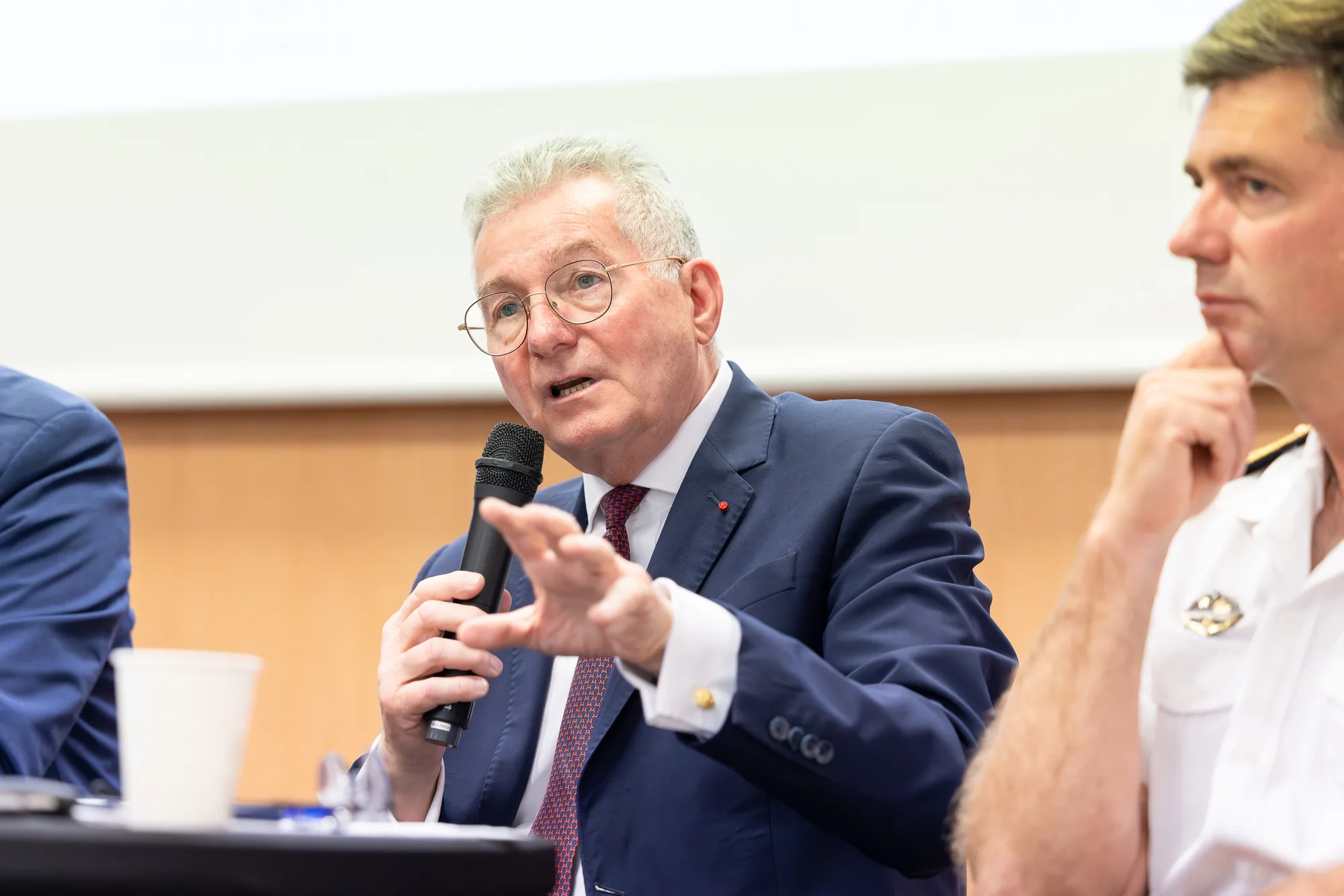
On the occasion of the examination of the 2027 finance bill, MP Yannick Chenevard submitted a report that sounds like a strategic alert. As rapporteur for opinion on the Marine nationale's appropriations, he welcomes a positive budgetary trajectory, in line with the Military Programming Law (LPM).
However, the document highlights a major structural weakness: the lack of permanence of its carrier strike group (GAN), due to possessing a single aircraft carrier. For the Var parliamentarian, the launch of the future new-generation aircraft carrier, the France Libre, must be a "historic opportunity" to equip France with a second vessel.
Unavailable One Third of the Time
Despite its qualities, an aircraft carrier is subject to incompressible technical constraints. Major overhauls (ATM), necessary for refilling nuclear fuel and deep modernizations, immobilize the ship for periods of up to 18 months. Adding intermediate maintenance, the report evaluates the real availability of the aircraft carrier at only 63%.
Having only one aircraft carrier means accepting being deprived of this strategic tool for long periods. It is a vulnerability that France can no longer afford in the context of deteriorating international security
This capability gap deprives France of an instrument of power, capable of projecting air power far and for a long time. It also affects its capacity for autonomous situational assessment, its unifying role in coalitions, and the credibility of the airborne component of nuclear deterrence (FANU).
Two Solutions for Permanence at Sea
Faced with this intermittency, the rapporteur explores two avenues to guarantee permanence of the carrier strike group. The first would be to extend the lifespan of the Charles de Gaulle beyond 2038. The second, more ambitious, would consist of building a "sister ship" to the new aircraft carrier, the France Libre.
Advertisement
This permanence would not imply doubling all resources. According to the report, a single carrier air wing and a single escort group could suffice, switching from one vessel to the other. The challenge is to ensure that at least one carrier strike group is always available, not to deploy two simultaneously.
A Global Power Issue
Yannick Chenevard details the efforts of competitors like China, which aims for a fleet of nine aircraft carriers by 2035, or Turkey. The United States is renewing its fleet, the United Kingdom has two aircraft carriers, and India and Italy display their ambitions. Giving up on a permanent capability would be synonymous with "military, maritime, and diplomatic decline".
The document also addresses the question of technological sovereignty, notably the dependence on the United States for the electromagnetic catapults (EMALS) of the France Libre. The rapporteur calls for reflecting on ways to limit this dependence, or even to develop a sovereign industry in the long term.
Capability Weaknesses
Finally, the report points out several other critical "points of attention" for the Marine nationale. The mine countermeasures vessels program (BGDM) has been delayed, creating a concerning reduction in capability.
The replacement of the ATL2 maritime patrol aircraft, essential for deterrence, saw its launch abandoned due to skyrocketing costs. The aging of training ships, some of which are approaching fifty years of service, also poses a challenge for training future sailors. These issues illustrate the complex budget trade-offs, even in a context of rising appropriations.
Photo Philippe OLIVIER.