Marion Cros, a pharmacist at the heart of the storm
At 35, Marion Cros embodies a new generation of pharmacists determined to defend a changing profession, never losing sight of the human element.
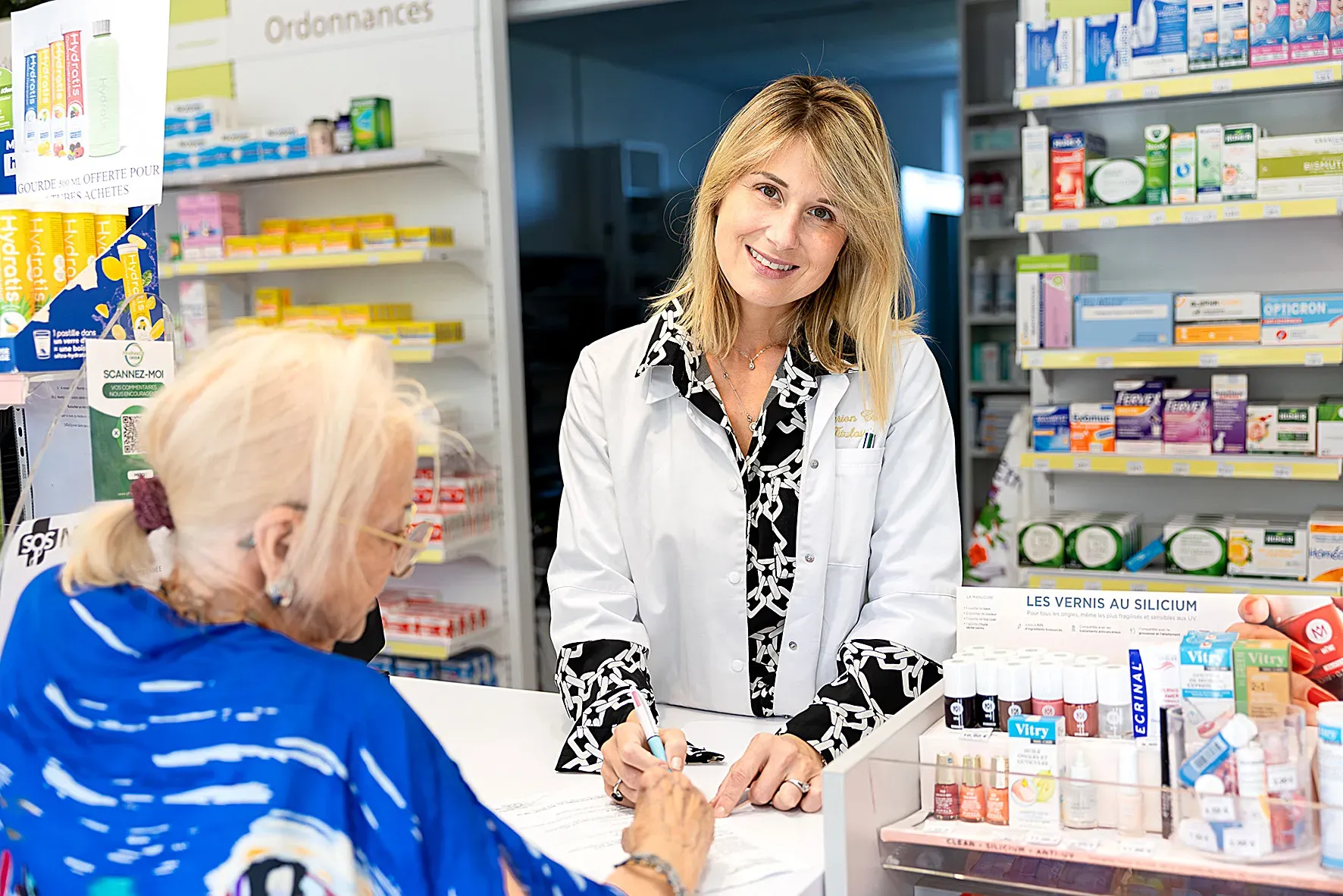
MUTATIONS At the helm of the pharmacie Cros (10 avenue du 15ème Corps), she combines rigour, listening, and commitment in an increasingly tense local and national context.

Vice-treasurer of the CPTS (Communauté Professionnelle Territoriale de Santé), involved in the future local maison de santé, Marion fights daily to ensure that proximity and quality of service remain the norm. UNUSUAL CAREER PATH Having graduated with her doctorate in pharmacy, she completed her training at a business school before working in the pharmaceutical industry in Paris. Quickly, the need to find meaning and connection pushed her to return to the field: "I love being a shopkeeper, but what I missed was human contact.
I felt a real need to reconnect with people, to return to my roots."
Lacking the funds, she travelled across the entire Var and Alpes-Maritimes looking for an affordable pharmacy, analysed the figures, and bought one of the oldest pharmacies in Hyères: "The city is beautiful but it lacks commercial dynamism. Parking accessibility, despite the first hour being free, remains complicated. Neighborhood shops struggle to attract people, and I find that the city centre lacks attractiveness for young people."
For the young pharmacist, the pharmacy remains a local landmark, a confidant, a trusted health professional. She insists on the importance of service and a smile: "Consultations with general practitioners are more rushed, due to lack of time and work overload. They too are experiencing difficulties.
Here, people find someone who listens, continuity, and personalized support. We know if the dog is sick, what studies the children are doing. There is a real bond, especially among the elderly, who would not change pharmacies for anything in the world.
A person comes because they are sick. They must leave with the right medicine, in the right place, at the right time, and above all with a smile. That is my priority."

The profession is evolving fast. Pharmacies must adapt to new missions (vaccination, antigen tests, prescriptions for sore throats and cystitis, personalized support): "Some tasks bring welcome financial support, while others add to the burden. Prescriptions for sore throats are a plus, but sometimes we would need to hire an additional person.
Not to mention our teams, who do remarkable work every day to cope with all these changes."
Faced with the medical desert, Marion invested in a teleconsultation booth, despite limited profitability: "It is essential to help patients out when there is no doctor available. It's not profitable, but it's a real service provided to the population.
We waste most of our days looking for a product. Patients go from pharmacy to pharmacy, it's exhausting for everyone. Some give up on their treatment, which can have serious consequences. In the most severe cases, some end up in hospital due to lack of treatment."
And, economic difficulties and the social context complicate management: "Town centre pharmacies must fight to survive. We have lost several margin points in 4 years, which weakens our economic system. The eldorado is over!
Since the health crisis, there has been incredible volatility. People are looking for meaning, but there is also a loss of reference points. The relationship to work has changed, and it is sometimes difficult to find or keep employees."
Anxiety is at an all-time high since the Sécurité sociale's decision to lower rebates on generics, without consulting the profession: "This will weaken thousands of pharmacies. We fear 6,000 closures and mass layoffs. We ask to be respected, considered, supported.
We were on the front line during the health crisis, it's about time to recognize our role and stop always placing the burden of savings on pharmacists." Faced with this situation, the profession is preparing strike actions, both day and night, and is calling for the mobilization of local and national elected officials.
INNOVATION AND ADAPTATION Yet, Marion looks to the future with lucidity and pragmatism. She believes in an increasingly connected pharmacy, with better coordination between health professionals: "Artificial intelligence is already transforming our practice. I use AI to check drug interactions, write letters, and save time on a daily basis.
AI will revolutionize the profession, but we must make sure to preserve the human element, the relationship, and listening."
For her, the pharmacy of tomorrow must combine efficiency, modernity, and human warmth: "Providing care is not just about dispensing medicine. It is listening, supporting, enlightening. We need human reference points, rooted in reality."
So, the young woman makes an appeal: "We must support city centre pharmacies, these healthcare businesses essential to the social, psychological, and medical balance of the population. We are not asking to be overpaid, but at least respected and valued. Our health system is envied throughout the world, we must preserve it, take care of it, and use it conscientiously.
It's not free, it is financed by the community."
Photos Philippe OLIVIER.