François Spoerry, the man behind the dream
Who was François Spoerry?
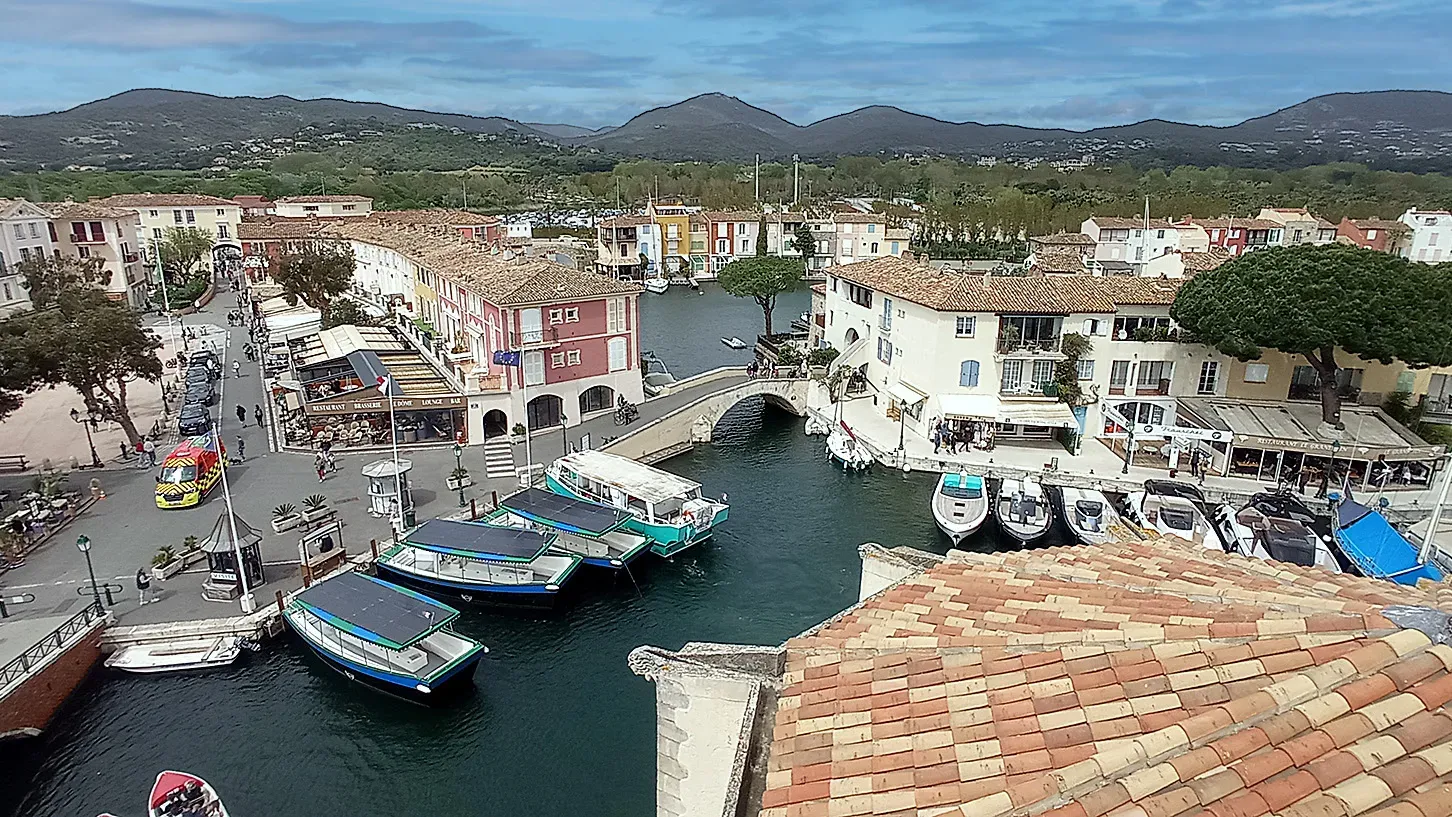
An Alsatian architect, passionate about sailing, he dreamed of a private port for his boat. During a lunch in Cavalaire, a friend told him about a marshy plot of land. At 4 p.m., they went to see it and François signed the sales agreement immediately. He had a vision: the lagoon of Venise. The marshy and sandy land was 30 hectares, unused.

How did the administration welcome this revolutionary project?
Advertisement
Before 1968, it was a path strewn with obstacles. Convincing decision-makers that a port-city could be born on marshes had no precedent in France. François, young and a concentration camp survivor, insisted on his vision. He inspired confidence despite the audacity of the project he was self-funding. He lobbied the ministries, until a senior official named Théobald believed in him, and helped him obtain the building permit on June 14, 1966.
Do you think his past as a resistance fighter influenced this audacity?
Absolutely. Committed to the Résistance, deported, he had survived the extreme. Taking risks had become natural to him. Persevering American "landscaping". He had a vision of a city with everything that entails.
Is this vision embodied in a neo-provençal style?
Yes. He even wrote a book "L’Architecture douce" of which here is an extract: "The particular atmosphere of Port-Grimaud, which gives it a sort of durability, comes from this solidarity with the constructions of past centuries, but also from the systematic use of low roof slopes, Roman tiles in pastel tones, genoises that rule over all constructions, plasters whose range of ochres and straw yellows has become over time an enchantment. We used curious to see the police reports since its creation: I doubt there have been many assaults."
Was the proximity to Saint-Tropez strategic?
Of course. François knew that he had to be near an attractive place and an airport. He was investing his own money, he had to sell, and quickly.
What image do you keep of his influence?
I remember a market in Mexique, in 1972. They sold T-shirts marked "Saint-Tropez", others "Brigitte Bardot" and "Port-Grimaud". Japanese, Chinese filed by the commune. Seized by the representatives of Port-Grimaud, the INPI estimated that these filings had been made in bad faith. According to the Institute, the commune attempted to appropriate a territorial and commercial identity that did not belong to it. This administrative decision sends a strong signal: the capture of an iconic name, linked to a history and a specific local governance, cannot be done without respecting prior rights. It symbolically restores the legitimacy of Port-Grimaud to have its own name. •
Interview by Pierre BEGLIOMINI Photo DR.