The moored dream of a visionary
An interview with Denise Spoerry, a privileged witness to the architectural epic of François Spoerry.
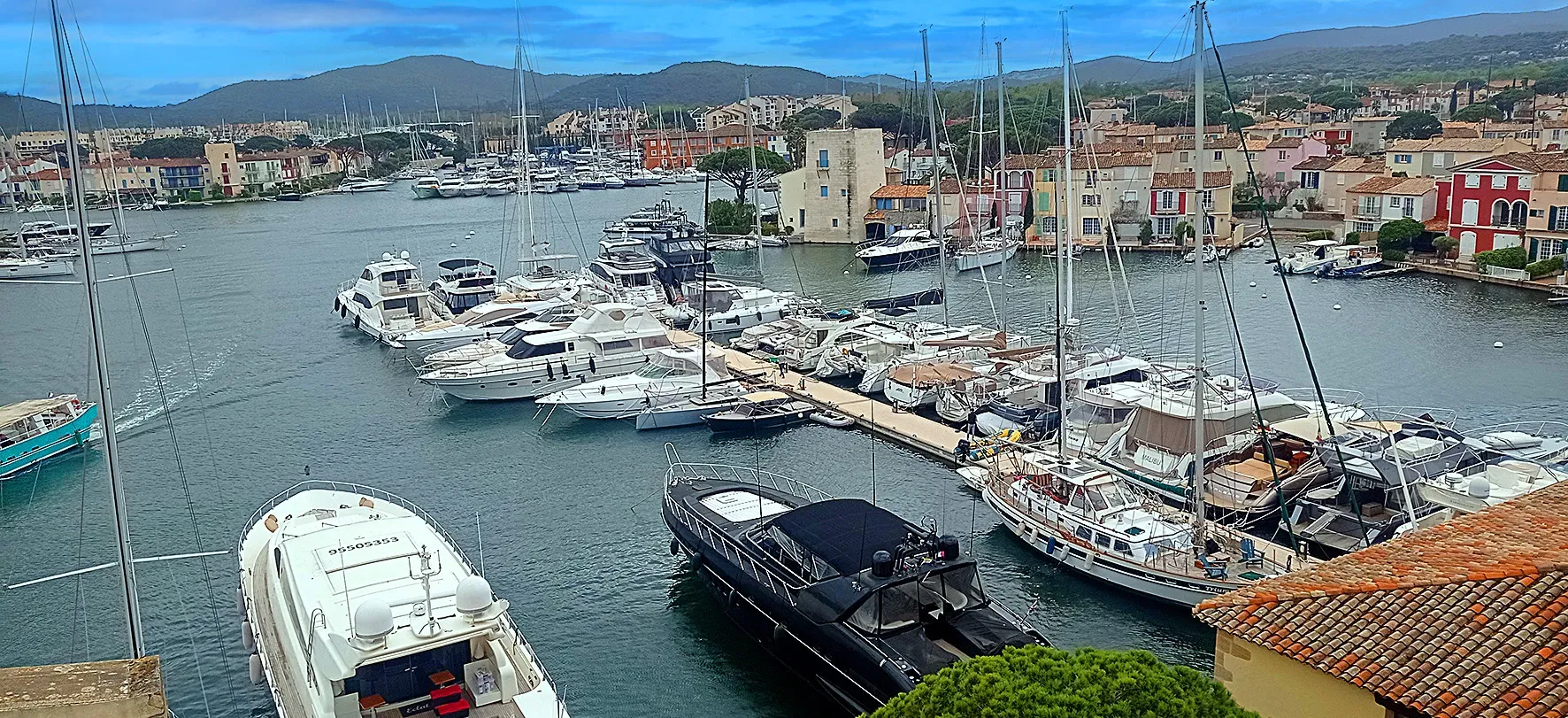
In the gulf of Saint Tropez, François Spoerry imagined a unique lakeside city, which became one of the symbols of the Var coastline: Port Grimaud. Port Grimaud 1, designed as a maritime city on a human scale, was followed by Port Grimaud 2, an expansion marked by compromises with foreign investors, and then by Port Grimaud 3, a return to the creator's personal initiative. Through the testimony of Denise Spoerry, companion and privileged witness, the history of an extraordinary project emerges: its origins, its tensions, its cultural and social impact, and the sentimental legacy it leaves behind.
The birth of a maritime dream How was Port Grimaud born? Denise SPOERRY. Port Grimaud was born from an ingenious idea: to organize the city around the boat.
François always said: 'The boat is the boss.' He wanted every house to have its mooring ring, its dock, and for daily life to unfold to the rhythm of the sea. It is sometimes said that each house is 'a miniature port.'
Advertisement
Is that an accurate description? DS. Oh yes, absolutely.
It is a very good description. Each house is almost a miniature port, with the boat being at the center of domestic life.

Port Grimaud 1: a city designed for daily life What was François Spoerry's philosophy in the design of Port Grimaud 1? DS. He wanted a horizontal, convivial living space on a human scale.
No large vertical housing estates, but diverse, colorful houses adapted to family life. The pioneers believed in the project. Their trust allowed the adventure to begin.
Port Grimaud 2: The tensions of expansion The expansion towards Port Grimaud 2 was not simple. What happened? DS.
In 1969, German investors acquired neighboring plots of land. They presented projects of concrete cubes, breaking with the initial spirit. François was devastated.
He feared seeing his houses face an opposing architecture. How did he react? DS.
He had to partner up, in spite of himself. The compromises were painful, the tensions frequent. But the whole area retains a certain architectural coherence, even if François would have designed it differently had he had total control.
Advertisement
Port Grimaud 3: the return to personal initiative And Port Grimaud 3? DS. There, it is different. Port Grimaud 3 was born from the conversion of a campsite. François took back control, faithful to his initial spirit. The expansion was controlled, coherent, and extends the work without betraying it.
A complete and lively town Port Grimaud is not just a seaside resort? DS. No, it is a real town. François financed the church, designed a community center with a post office and services, and encouraged local businesses. He wanted Port Grimaud to function daily, not just in summer.
Cultural, social and tourism impact What was the cultural and tourism impact of the site? DS. Success was immediate and lasting. Port Grimaud was recognized as 'remarkable contemporary architecture'. But above all, it broke normative constraints and paved the way for a freer architecture.
And on a social level? DS. Horizontal housing promotes social ties, informal surveillance, and conviviality. Unlike large housing developments where families get lost in verticality, Port Grimaud offers life on a human scale.
Aging and adaptations The population is aging. How has the project adapted? DS. The car-free utopia clashed with reality. François accepted adjustments, such as one parking space per house, to maintain a comfortable life for the eldest. But the original spirit remains intact.
Relations between the municipality and the ASL You mentioned tensions with state representatives. Can you elaborate? DS.
Yes. For decades, Port Grimaud operated with its own rules. François had designed the docks and rings so that it costs a great deal taking into account the various procedures and the expenses generated by lawyers' fees.
the residents could live with their boat as they do with their house. But recently, the municipality and State services wanted to impose new standards, sometimes in contradiction with what had been working for sixty years.
Concretely, what is it about? DS. The small squares that François had built to allow families to disembark, stay for an hour, and then leave.
These spaces had never been sold; François had made no profit from them. Yet, the town hall and the State now want to make them profitable by renting them out. For me, this is a direct attack on the spirit of the place.
How are the residents reacting? DS. Many are fighting back.
The ASL, the Associations Syndicales Libres that manage Port Grimaud, have taken the bit between their teeth. What is the role of the ASLs? DS.
They are essential. They ensure the daily management, the maintenance of the docks, the mooring rings, and the common areas. They defend the spirit of Port Grimaud against external pressures.
Without them, the project would have already been denatured.
Sentimental and timeless legacy If you had to pass on a message to future generations? DS. Do not touch the spirit of the place. François had planned everything. Port Grimaud is a fantastic design that will still please people in a hundred years.
Can we say that Port Grimaud is 'a dream moored in the gulf of Saint Tropez'? DS. Yes, absolutely. It is his dream, made possible by a rare plot of land between the road and the sea.
And on a personal level? DS. I lived a free and wonderful life thanks to François. Port Grimaud is our achievement, our emotional heritage. I do not want anyone to take it from us.
Port Grimaud appears, through this dialogue, as a hybrid work: aesthetic, social, and tourist. Its strength lies in the intimate relationship between the housing and the sea, in the diversity of its facades, and in the design of a city on a human scale. Between conservation and adaptation, Denise Spoerry's message is clear: preserve the spirit of the place so that the dream moored in the gulf of Saint Tropez continues to live.
Interview by Pierre BEGLIOMINI.