Gustave Courbet, from the song of nature to the voices of revolt
A major exhibition is on display at La Banque, musée des Cultures et du Paysage in Hyères, until May 24.
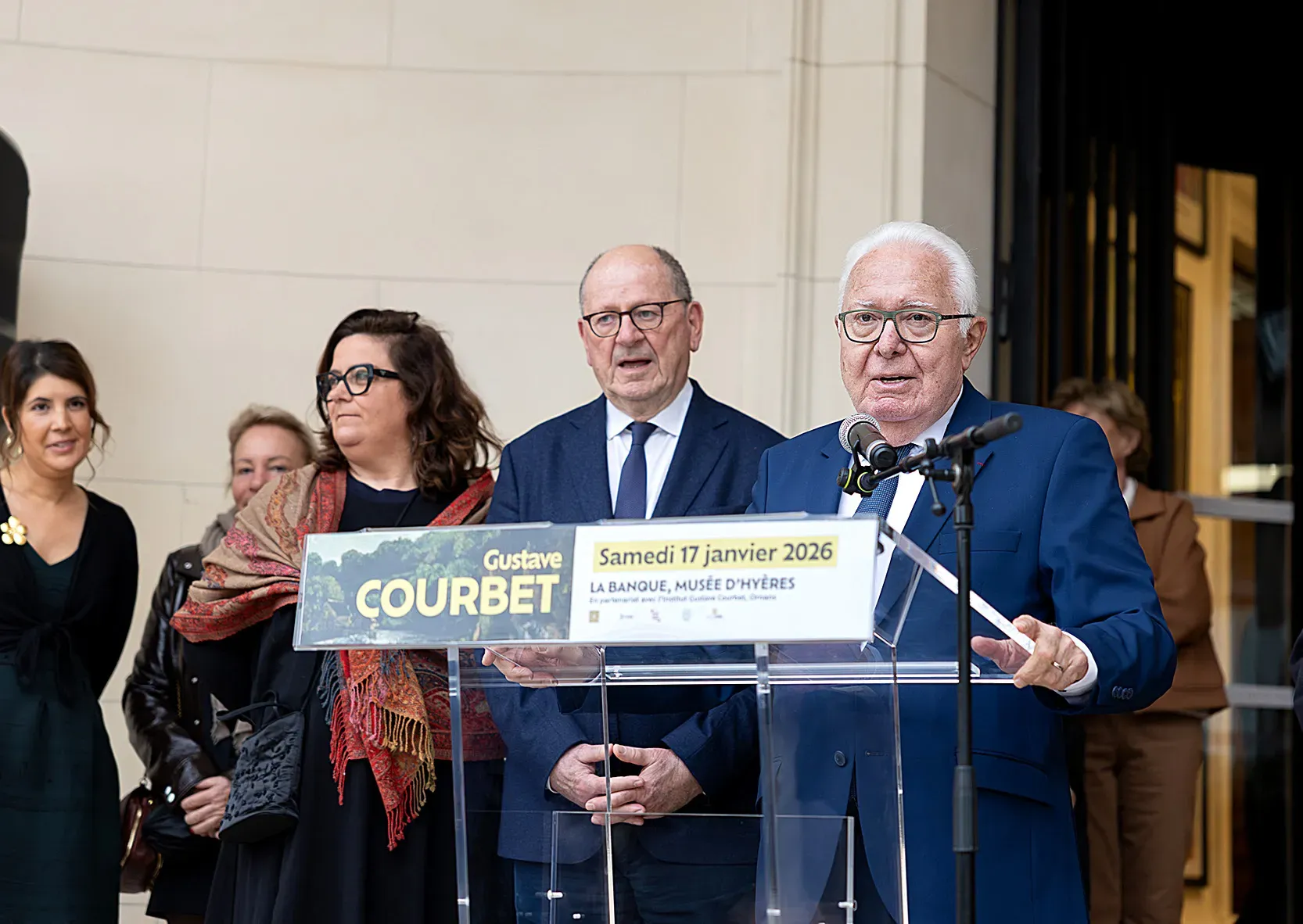
La Banque is hosting, in partnership with the Institut Gustave Courbet de Ornans, an exceptional exhibition dedicated to one of the pioneers of realism in painting. Entitled 'From the song of nature to the voices of revolt', this retrospective presents more than 120 works, objects, letters, archives, and vintage photographs. These pieces, signed by Gustave Courbet and his contemporaries, come from the Institut Gustave Courbet d'Ornans, as well as from French museums and international private collections.
The Institut Courbet, born from a family's passion for the artist's work, plays an essential role in Courbet's rehabilitation. In 1971, this family founded the Association des amis de Gustave Courbet and acquired his birthplace to turn it into a museum, which they then donated to the Département du Doubs in 1977.

ART HISTORY Gustave Courbet marked a turning point in art history by breaking free from the conventions of mythology, religion, and grand historical scenes. 'He chose to highlight workers, peasants, and nature as it is, thus giving rise to the realist movement, a term he did not care for much,' emphasized Franck Mei, director of the musée des Cultures et du Paysage, La Banque.
Advertisement
The exhibition is divided into twelve themes, allowing a better understanding of the master's work. Among them, the first section, 'Le chant de la nature', highlights the landscapes that so inspired Courbet, particularly those of his native region, Ornans. For her part, the curator of the musée d'Ornans, Carine Joly emphasizes: 'To paint a landscape, you must know it'.
Thus, the works presented, such as 'Un pont à Ornans' (1873) and 'Un barrage près d'Ornans' (1861), testify to his attachment to the vallée de la Loue and its characteristic landscapes.
The other sections of the exhibition explore various themes, ranging from 'L'ode à la femme', highlighting the bold representation of the female body, to 'Le camp des bourgeois', where the painter created a series of drawings for a work by Étienne Baudry. Lesser-known works, such as 'Vue du lac Léman' (1876) and 'Les bords de la mer à Palavas' (c. 1854), also show Gustave Courbet's interest in seascapes and the animal world.
Jean-Pierre Giran, mayor of Hyères, praised this exhibition as one of the most beautiful dedicated to Gustave Courbet, with 42 paintings on display and more than 100 works tracing the career of this exceptional artist. STILL LIVING HERITAGE Gustave Courbet, born in 1819 in Ornans and deceased in 1877 in Suisse, remains an artist in the world of contemporary art. As Hervé Novelly emphasized, the exhibition testifies to 'the commitment of a man happy with freedom and the lasting influence he had on the generations of painters who followed'.

Carine Joly, also curator of the exhibition, did not hide her emotion: 'It is always a moment of extreme emotion to inaugurate an exhibition that required a lot of work.' She encourages the public to come and discover the landscapes that inspired this 19th-century master, a true ambassador of Ornans and the vallée de la Loue.
The exhibition 'From the song of nature to the voices of revolt' is to be discovered without delay, a unique opportunity to explore the work of an artist who remains an essential reference in art history.


Laurette PARAY - Photos by Philippe OLIVIER.