Alexander Calder's Balance in Colors
The La Banque museum is exhibiting 69 works by Alexander Calder, an artist who made balance a poetic language, until October 31.
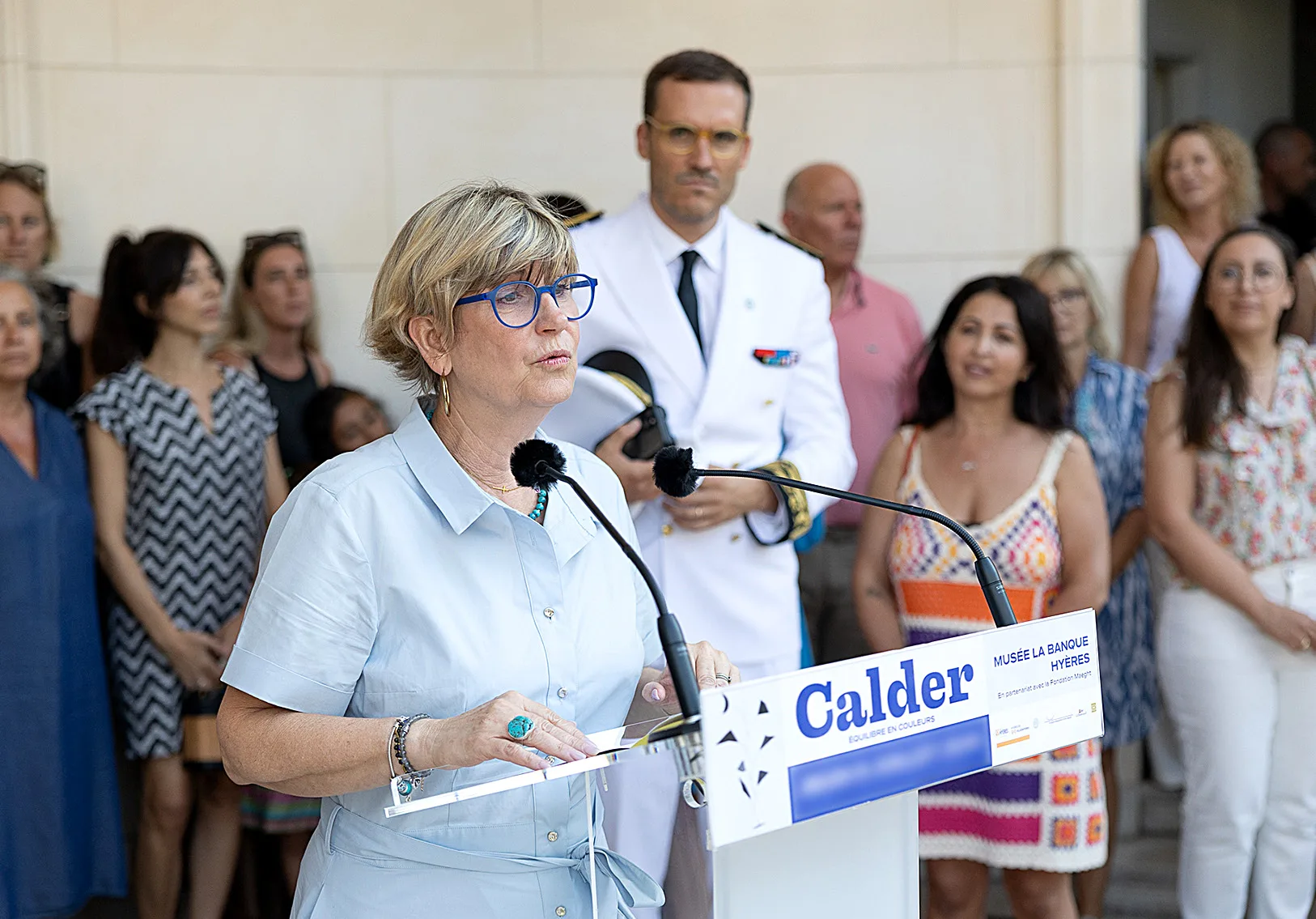
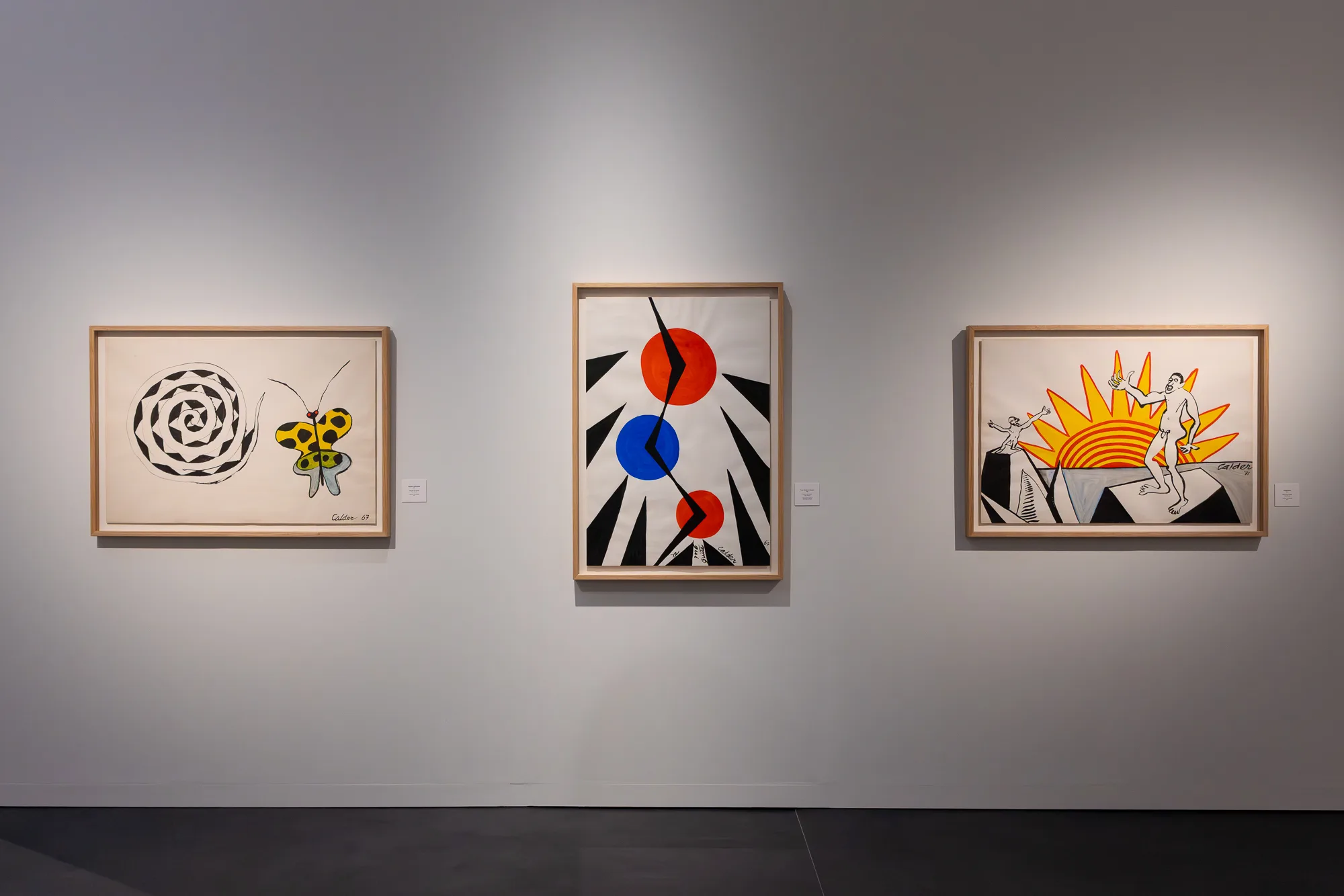
Until October 31, the Musée La Banque is hosting "Calder - Équilibre en couleurs", an exhibition created in partnership with the Fondation Marguerite et Aimé Maeght.
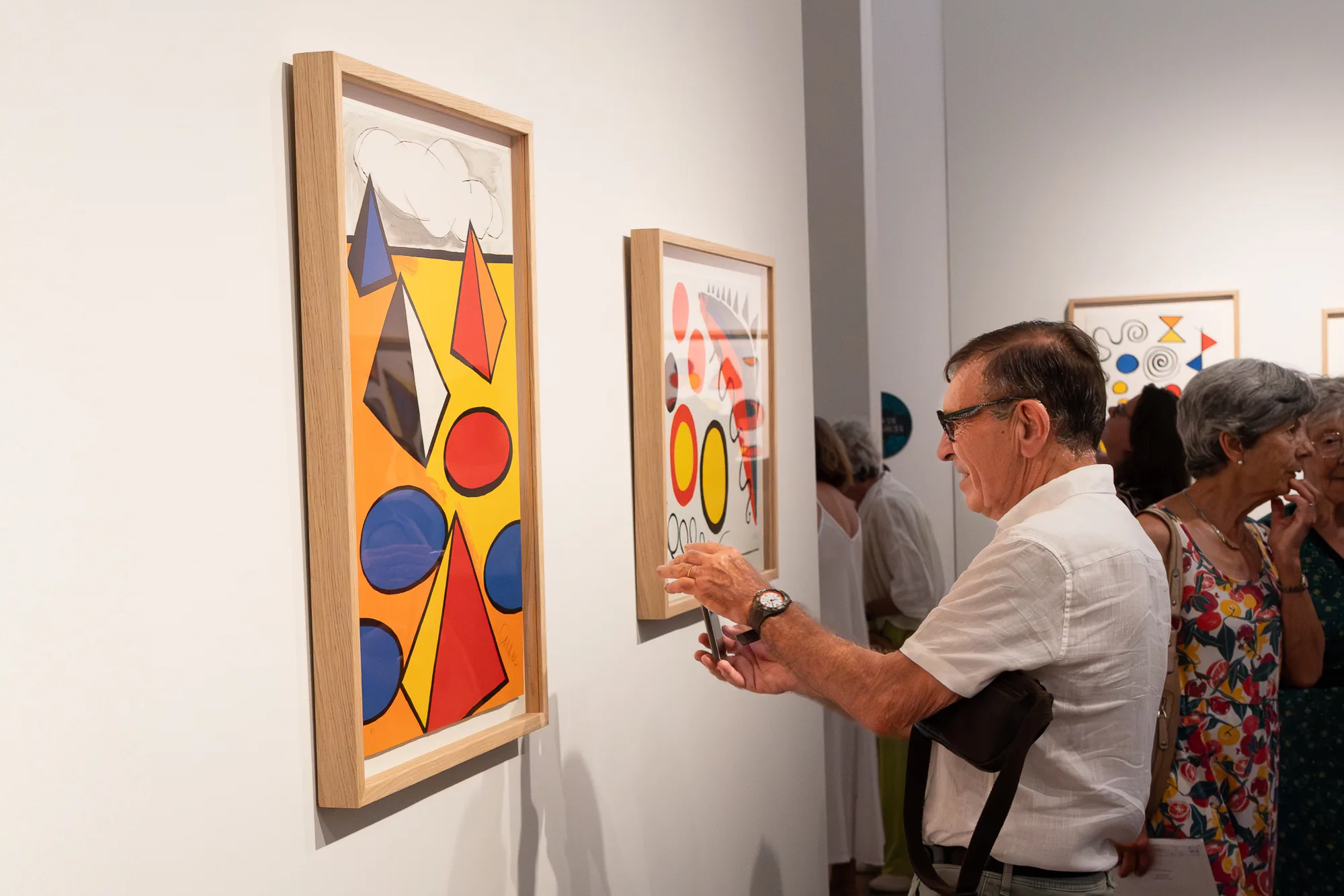
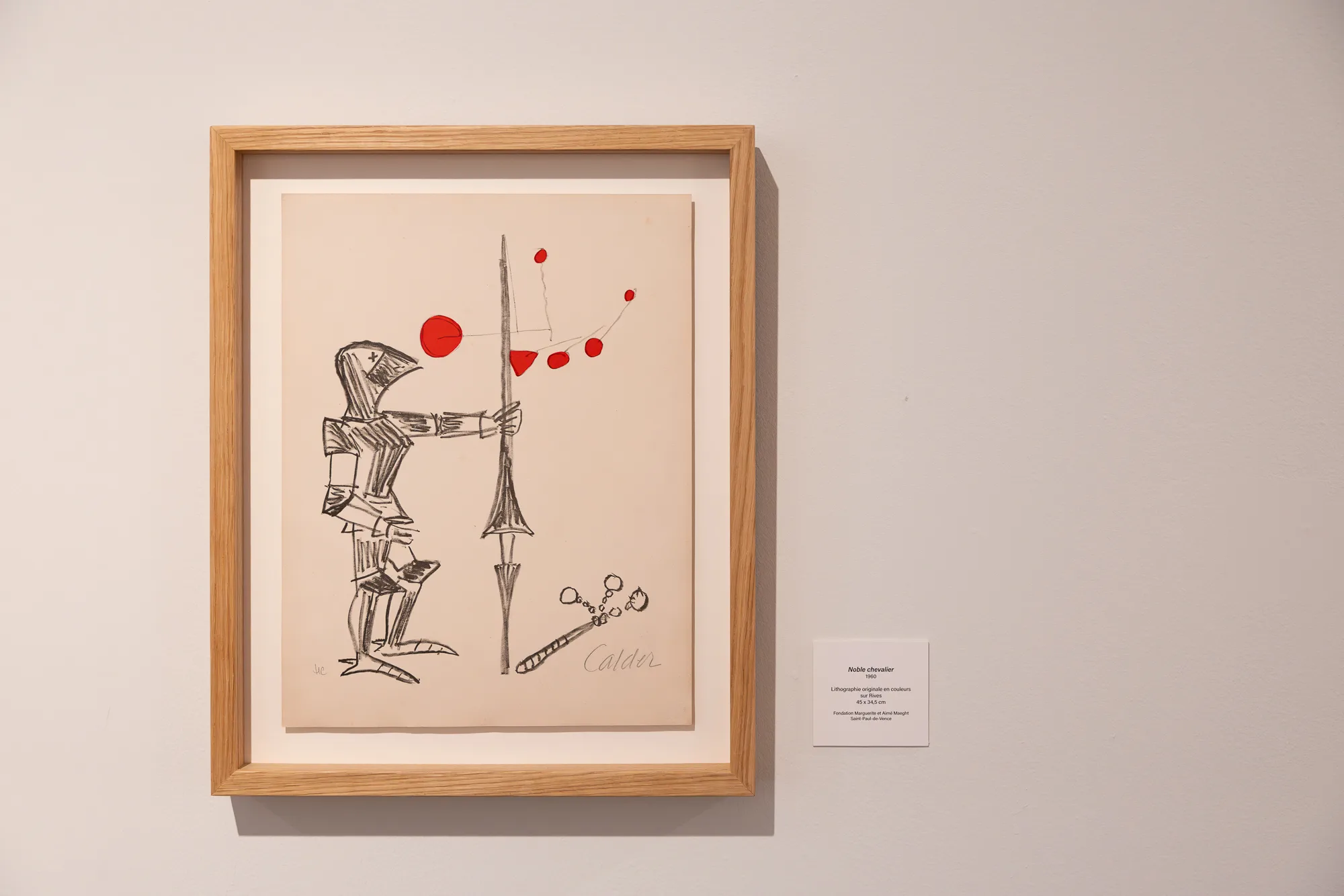
Through 69 works - gouaches, lithographs, bronzes, inks and mobiles - the exhibition retraces the journey of an artist who made movement a sculptural material and balance a poetic language.
A sculptor of the air
Born in 1898 in Pennsylvanie to a family of artists, Alexander Calder began studying mechanical engineering at the Stevens Institute of Technology, before turning to art. This dual training, both technical and sensitive, irrigates his entire body of work: the precision of the gesture and a taste for industrial materials can be found in each of his creations.
Advertisement
An illustrator for the New York press in the 1920s, he moved to Paris in 1926 and discovered the effervescence of the avant-garde. It was there that he designed his Cirque Calder, a miniature ensemble of more than 200 elements made of wire, wood, leather and fabric, which he animated himself during performances given in Parisian studios and then in Berlin and New York.
His meeting with Piet Mondrian in 1930 marked a turning point. Calder turned to abstraction and primary colors, laying the foundations for what would become his signature - balanced sculptures.
Mobiles and stabiles
The exhibition highlights the invention for which Alexander Calder remains universally known: the mobile. The term was coined in 1932 by Marcel Duchamp to designate these suspended sculptures, made of cut aluminum sheets assembled on long metal rods, which move under the effect of the air.
Initially motorized, they gradually freed themselves from any mechanism to depend only on the wind – a way, for the artist, to make instability an elegance.
In mirror to these aerial works, Alexander Calder developed from 1937 fixed sculptures in painted steel: the "stabiles", a term invented by Jean Arp. The garden of the Fondation Maeght preserves one of its masterpieces, Les Renforts, created in 1953 in echo to the medieval wall of Saint-Paul-de-Vence.
Less known to the general public, Alexander Calder's graphic practice occupied an essential place in his work. A great lover of gouache - a rapid and vivid painting that he practiced in his studio in Saché, in Touraine, which he humorously nicknamed the "gouacherie" - the artist never worked directly on the lithographic stone.
His gouaches served as a matrix: transferred to plates by a chromist, they were then printed after the artist's validation. Between 1950 and 1980, this collaboration with the ARTE-Adrien Maeght printing house gave birth to more than two hundred lithographs and etchings.
A founding friendship
The exhibition also retraces a story of friendship, one that united Alexander Calder with Aimé and Marguerite Maeght from 1947, during the Exposition internationale du surréalisme in Paris. From this meeting was born a collaboration of nearly thirty years, until the artist's death in 1976, and an intimate relationship such that Alexander Calder would lead performances of his circus to entertain Bernard, the Maeghts' young son who was then ill.
In 1969, the Fondation Maeght dedicated a retrospective of more than 300 works to the artist, some of which had never been shown to the public, such as une boule noire, une boule blanche (1930). It is this privileged relationship, and the exceptional collection it helped build, that the Musée La Banque presents in Hyères.
Article from the print edition of La Gazette du Var