General de Gaulle’s legacy facing current challenges
François de Canson praised the legacy of General de Gaulle as a benchmark for tackling contemporary crises.
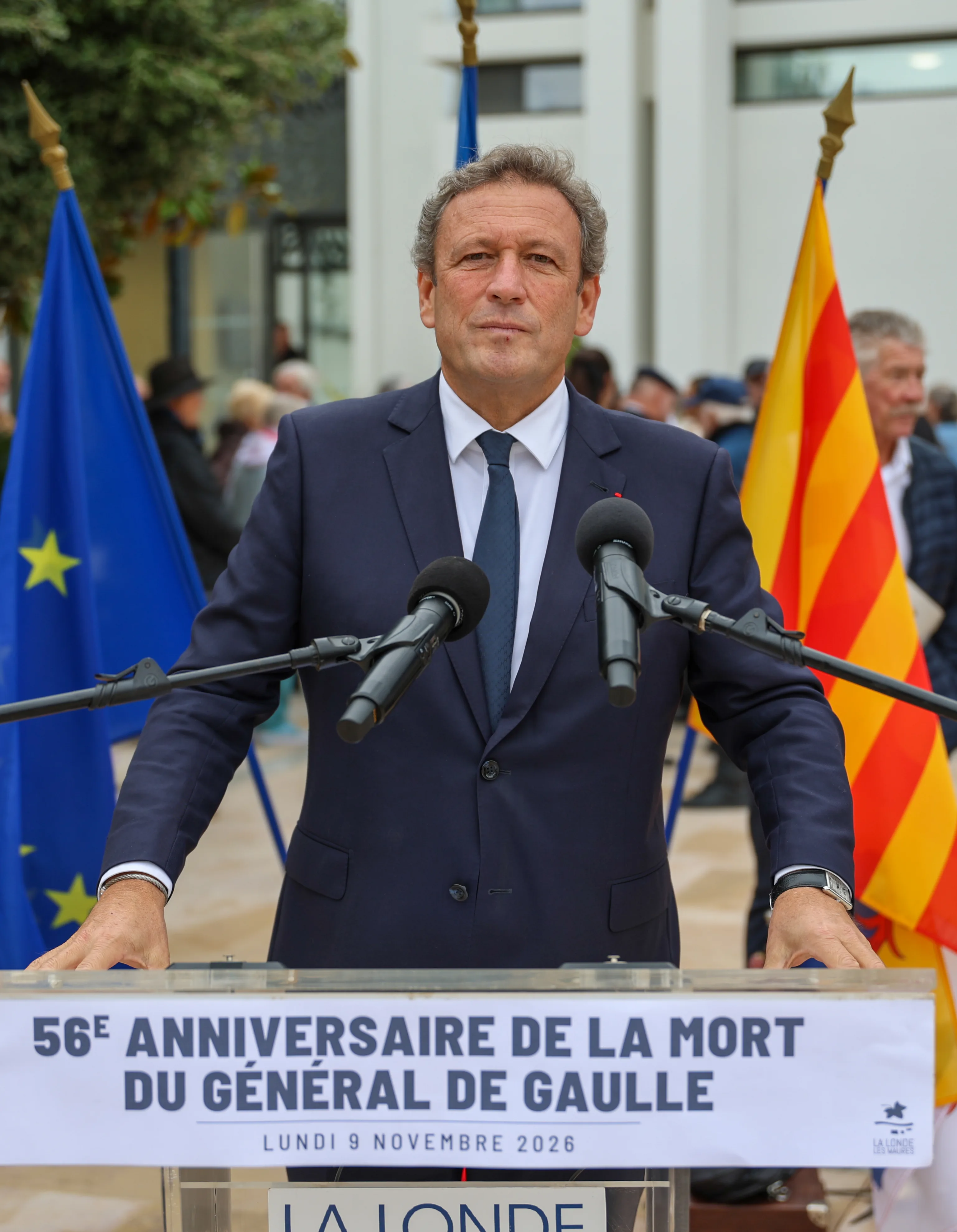
Fifty-six years after his passing on November 9, 1970, the figure of General de Gaulle continues to inspire. On November 9, François de Canson, President of the Région Provence-Alpes-Côte d’Azur, paid tribute to the man of June 18, emphasizing the relevance of his thinking in the face of current uncertainties.
For the elected official, the Gaullist legacy is a source of lessons for public action. Recalling Georges Pompidou's words, “France is widowed,” he insisted on the dimension of a destiny dedicated to the independence of France and its standing in the world, a vision that remains unique in the current geopolitical context.
An example of courage and vision
The founding act of France Libre in June 1940 was the moment when General de Gaulle refused to separate military defeat from the moral survival of the nation. “He understood before many others that a country's power is not measured solely by its armies, its wealth, or the extent of its territory, but first by the moral strength of those who refuse to give up on it,” recalled François de Canson.
Advertisement
This refusal, carried out “in the solitude of London,” restored France to its standing among the victors and laid the foundations for its reconstruction. General de Gaulle thus engaged the country in a profound institutional, economic, and scientific modernization.
Facing current crises
In our era marked by the return of war in Europe, power rivalries, and our strategic vulnerabilities, the Gaullist example offers a valuable method. “His example teaches us a method, a discipline of the mind and, even more, a certain stature in the way public responsibilities are exercised.”
This method consists of “facing realities, preferring the long term over immediate restlessness, and taking necessary decisions, even when they are difficult.”
General de Gaulle's departure in April 1969, following the rejection of his reform project by referendum, is an ultimate demonstration of respect for popular sovereignty and the given word.
The strength of the territories
François de Canson also highlighted the strategic role of the Région Provence-Alpes-Côte d’Azur for national sovereignty. From the naval base in Toulon to defense and aerospace industries, the regional territory is a direct actor in French power.
“Serving a Region is never turning away from France. It means contributing, from our position, to its prosperity, its cohesion, and its influence.”
General de Gaulle himself had perceived the importance of territories for the modernization of the country, long before their institutional rise in power.
The speech concluded with a call for unity, inspired by General de Gaulle's ability to unite people. Facing ongoing confrontations, he insisted on the need to preserve the awareness of a shared history and the will to share a future.
Advertisement
“This gathering,” he specified, “is not the erasing of convictions, but the recognition of higher values such as freedom, human dignity, and justice.”
The best way to honor this legacy is not simple commemoration, but the application of the standards that guided his action: “No nation receives its future as an inheritance. It must want it, prepare for it, and build it.”


Article from the print edition of La Gazette du Var