The fires tell us something about France. Yet we must be willing to hear it.
Fires destroy forests. They also reveal a Nation.
Crises possess a virtue unknown to times of calm: they abolish posturing. They subject rhetoric to the test of facts. They show what endures when everything falters. A crisis always reveals two things: what threatens a country... and what saves it.
For several years, our public debate has told the same story: that of a fragmenting society, of individualism become the rule, of a Republic no longer able to produce common ground. We spend much time observing what is unraveling. Then the fire comes. And this narrative cracks.
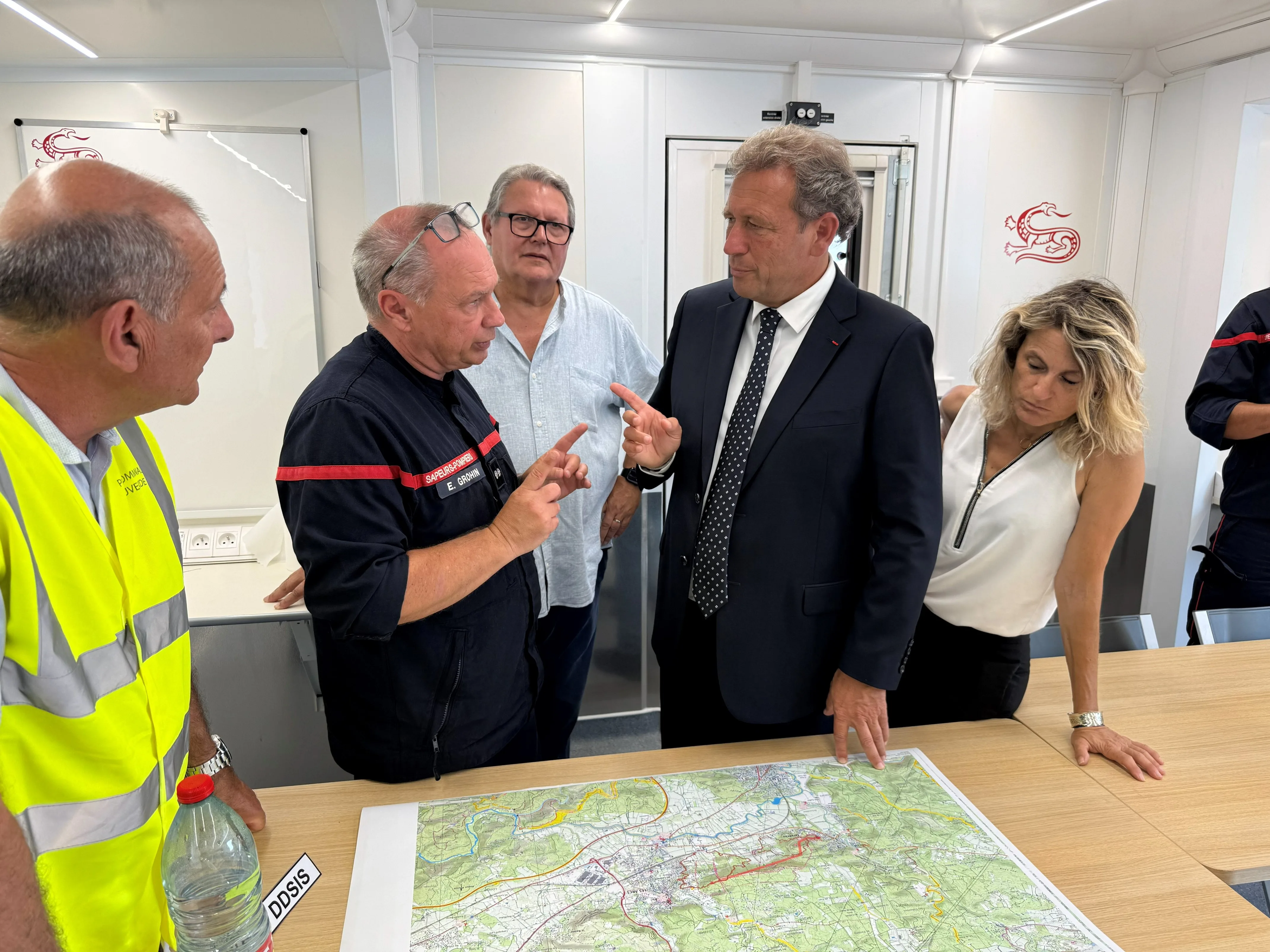
Another France appears. A silent France. A France that does not argue, because it acts. That of the firefighters, professional and volunteer alike. That of the mayors who organize, the CCFF who don their orange suits once more, the farmers who lend their equipment, the charities that welcome, the businesses that release their committed employees, the residents who open their doors to evacuated families. This mobilization is not improvised. It is not born of emotion. It reveals a deeper reality: our country still possesses an immense capital of collective responsibility.
Advertisement
We have ultimately forgotten an obvious truth: a Nation is held together first by a community of responsibilities before it is held together by an addition of administrative competences. The State is indispensable. Yet it will never be enough. For no administration, however efficient, will ever replace a society that agrees to take its share of responsibility.
The sense of duty has not disappeared. Commitment has not disappeared. Solidarity has not disappeared. They still exist, far from the noise, far from posturing, where what is essential is at stake.

This is where politics begins.
Fires are not exceptional emergencies. They have become a permanent risk, widespread across the country. Such a risk cannot be governed by the reflexes of emergency alone. It calls for a sustainable organization of the protection of our territory.
Sovereignty begins here. In the capacity of a Nation to protect its own without depending on others. To train those who commit themselves. To produce the equipment it needs. To invest before the catastrophe rather than after. Defending our volunteer model, strengthening our aerial fleet, developing a French and European industrial sector for civil security: these are no longer sectoral policies. They are henceforth choices of sovereignty.
In the ordeal, an obvious truth reappears. The Republic ceases to be an institutional architecture. It becomes once more a chain of responsibilities. The mayor protects, the department deploys help, the region mobilizes its resources, the State coordinates. Each holds their place. Each makes the other stronger.
We devote much energy to repairing what unravels. This is necessary. But the primary political responsibility lies elsewhere: to protect what still makes the country strong. Commitment is a national asset. It cannot be decreed. It is transmitted. It is recognized. It is protected.
Fire destroys trees. It also reveals roots. The invisible roots of France are made of neither stone nor steel.
They are made of commitment, of responsibility, and of that deeply French conviction that the common good is also our business.
François de Canson, maire de La Londe-les-Maures