A natural heritage serving care
Port-Cros National Park and Renée Sabran Hospital signed an agreement to preserve the site's natural heritage.
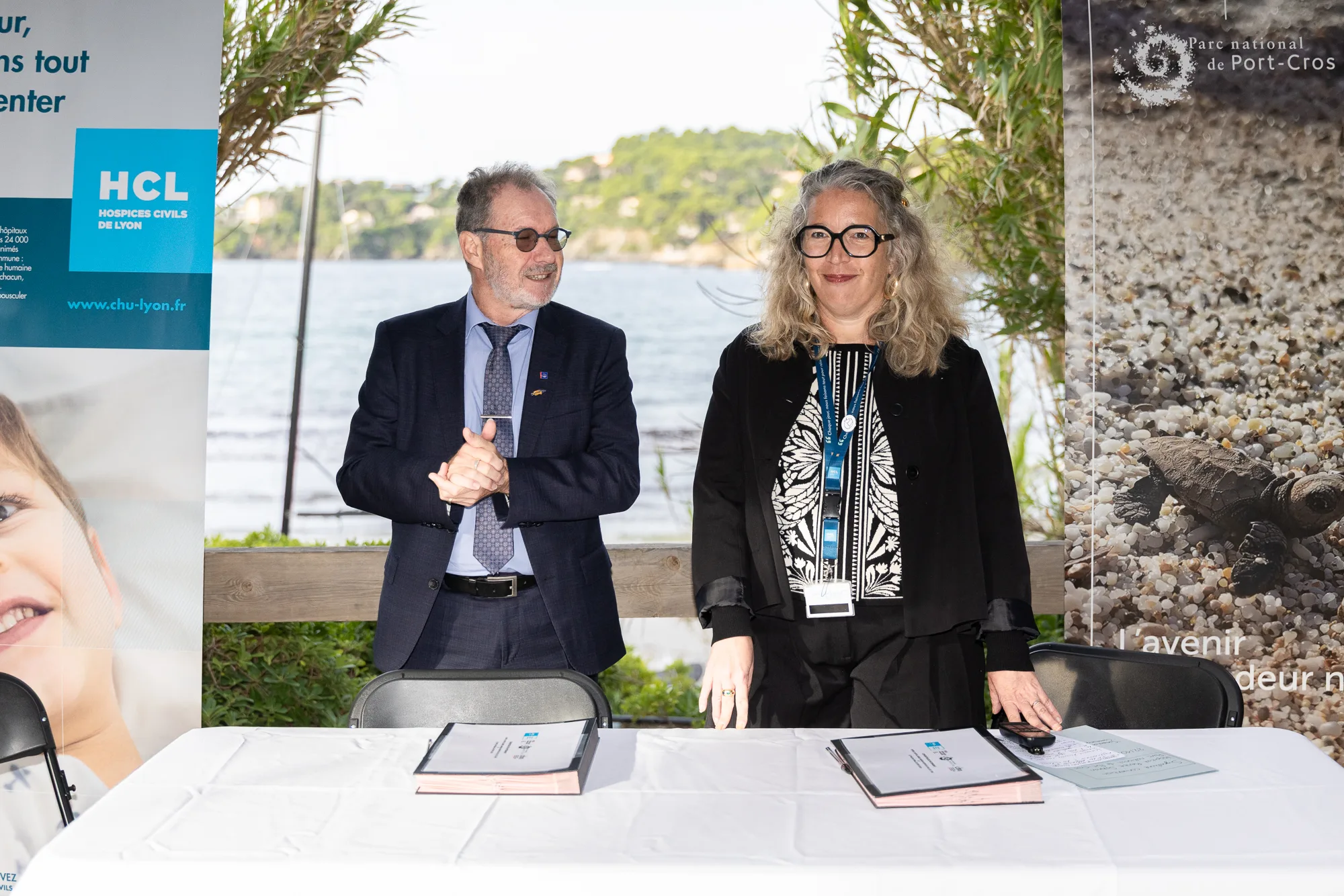
When human care meets nature protection, an innovative alliance is born. Port-Cros National Park and Renée Sabran Hospital, an establishment of the Hospices Civils de Lyon (HCL), signed a partnership agreement on October 22.
This agreement formalizes and strengthens a collaboration intended for the sustainable management and preservation of the hospital domain's exceptional biodiversity on the Giens peninsula.
Built at the end of the 19th century to welcome children suffering from tuberculosis and rickets, Renée Sabran Hospital has always taken advantage of its unique environment. Its 30-hectare estate, composed of forests, meadows, and dune areas, is a recognized therapeutic asset, offering patients the benefits of sea air and a soothing setting.
Advertisement
Today, this establishment of 250 beds and 500 professionals, specializing in surgery, rehabilitation, and geriatrics, integrates its natural setting into its care pathways. The site has also been included in the perimeter of the listed site of the Giens peninsula since 2005 and in Natura 2000 sites.
Four concrete axes of cooperation
This collaboration revolves around the "One Health" concept, which recognizes the interdependence between human health, animal health, and ecosystem health.
For the Hospices Civils de Lyon, this partnership is a concrete application of their corporate social responsibility policy and their 2035 Strategic Project, which places environmental health at the heart of its ambitions. For the National Park, it involves supporting a major local player in enhancing its natural heritage, in accordance with the objectives of its charter.
The agreement defines four major projects to make this shared vision a reality.
The first is the CARET project, supported by the Office français de la biodiversité, which aims to protect the nesting sites of the loggerhead sea turtle, a vulnerable species. Restoration actions for the back-beach of La Vignette, staff training, and patient awareness initiatives are planned.
The second axis relates to floristic expertise. In connection with the Conservatoire botanique national méditerranéen, the Park will continue inventorying and monitoring high-stake local species, such as the Hyères Serapias.
The partnership also provides for educational actions, featuring interventions by eco-guides and lectures within the hospital.
Finally, both institutions will consult on the management of the adjacent marine environment, notably regarding the transformation of underwater trails into Strong Protection Zones.
Concluded for a duration of one year and renewable for up to five years, this agreement establishes a framework for an exemplary synergy between health and the environment.

Photos Philippe OLIVIER.