Gil Bernardi: 'The wanderings of a country struggling to find a consensus'
On the Fête nationale, Gil Bernardi recalled that 'lines are moving and minds converge towards a rejection of the old world.' The entire face...
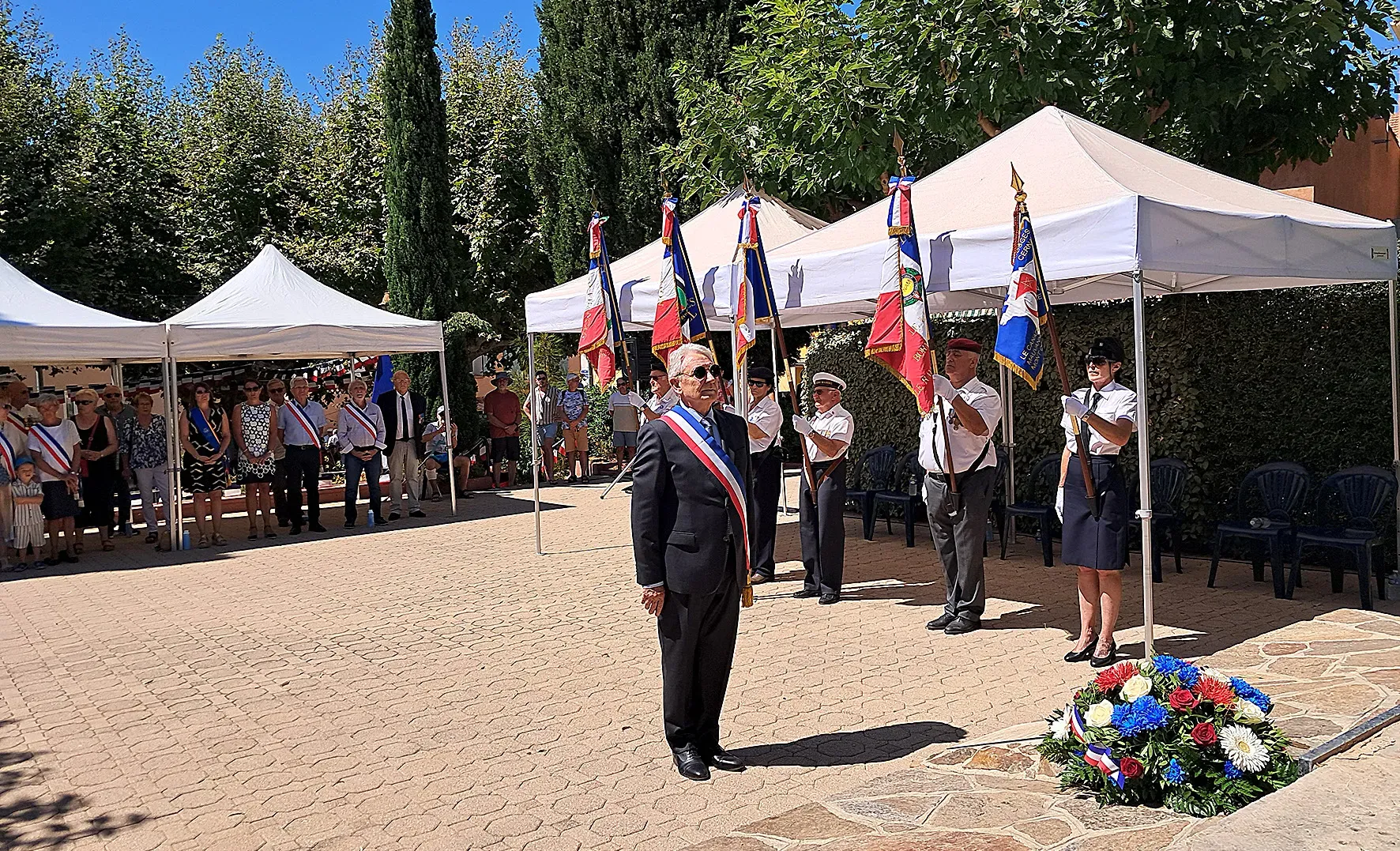
Dissemination of new ideas, state debt, economic crisis, administrative confusion, questioning of the established order and criticism of institutions, challenging of power itself... 'This fractured society searching for itself, between the currents of reaction and reform - those of standstill and the forces of movement - is not the one whose hesitations we knew, whose anger we felt, and whose dizzying heights we experienced... just eight days ago...
when the people of France were called upon to choose the path of their democratic destiny through the election of their Députés... if not that of the Révolution française... Any resemblance to the current situation would be purely coincidental,' the mayor declared.

comparison with a millennium of absolutism? Only a few weeks, to build a colossal work, to tear down the walls that enclosed feudal society, on May 5, with the convoking of the États Généraux in Versailles, which transformed into the Assemblée Nationale Constituante' (...) the mayor noted.
Advertisement
ABSOLUTISM The municipal elected official continued: 'Even if the Liberté and Égalité reacting through the people of France resemble, through the shocks that have recently shaken our society, those of the Révolution...
Although the events refer to the same dogmas, to the same mechanisms that drove the change from the Ancien Régime; during a few months of intellectual ferment, in this year 1789. The ideas were well in place, with the thinkers of a new world, already allergic to absolutism and arrogance: Rousseau, Voltaire, Sieyès, Beaumarchais, Condorcet - with the 'Jacqueries' in the Provinces. Like so many boiling suburbs, and the Clubs like the press to relay them, from 'La Gazette' to 'Mercure de France', the posters and fiery articles of 'La Sentinelle du peuple'.
On the eve of these so disappointing États Généraux, for lack of obtaining the ear of the royal power.
It took nothing more, to imagine new horizons, beyond the three orders and merged into the Tiers-État, to feel the power's fear of the people, to provoke these uprisings like so many treaties of genius that would permanently mark the political, institutional, and philosophical life of our Nation, for over two centuries - but what are two short centuries, in CONFRONTATION The first magistrate added: 'The entire face of France in its inspirations, in its organization, in its structuring, has changed radically in the confrontation of ideas, between the Girondins and Montagnards, with the Convention Nationale of September 21, 1792, and the survival, the permanence of two tendencies, conservative and reformist, to this day. And yet, despite the pacification of debates, this new society of ours is searching for itself once again in factions, in combinations of apparatus and chapels, in unfindable majorities, in improbable governance alliances that had already paralyzed our country under the 3ème République! And under the 4ème.
Before finding a new balance under the 5ème which leaves to the stature of the Chef de l'État, the task of arbitrating between a presidential system and a parliamentary system... An agreed arbitration with the majority electoral system which assumes that the dominant political party is at its hand at the Palais Bourbon. Until, sometimes, the people decide otherwise; and as during other consultations, referendums, those ones, decide.
In the wake of dizzying polls, where the temptation of extremes has, in just a few days, oscillated the cursors of a relative majority to the two extremes of our Nation's political spectrum, where we wonder about the wanderings of a country struggling to find a consensus, a government at the center.'
UNCERTAINTY In this now imprecise 'marais', in a climate where we feared the disengagement of the Français from political matters and the hard-won right to vote, it is still the uncertainty over our governance and the proper functioning of our institutions that fuels the debates in our country. Should we be moved by this? And put the exercise into perspective as the expression of the sovereign people?
No matter the parties, the combinations, the alliances of convenience - the essential is there, in the Word of Mirabeau: 'You are going to establish a social system which was, a few years ago, below our expectations. Your laws will become those of Europe, if they are worthy of you'! The constitutional architecture, the structuring of the État, in its Préfectures and its Collectivités territoriales - inherited from the Révolution française - will mean that the political crisis of the Partis, and the instability of government coalitions, will have little consequence.
Advertisement
Other than reinforcing the presidential character of the République, faced with the neutralization of parliamentary power. For nature - political - also abhors a vacuum. For the Institutions are only as good as the quality of the men and women who serve them, certainly, but rest - always and forever - on the sovereignty of the Nation; and each of us is its guardian.
The Déclaration des Droits de l'Homme et du Citoyen of August 26, 1789, the Constitution of September 3, 1791, very much present in that of 1958, as in our political life, are our treasures of democracy, gigantic, immutable, timeless, of which the inconsistencies of the polls are but graffiti that can change nothing in the unalterable marble.
It is the siècle des Lumières that continues to enlighten the path of the Démocratie of today. The Assemblées, the Régimes, the hiccups of the Histoire de France will pass, the work of the Révolution française is eternal. Terrible, perhaps, but grandiose,' concluded Gil Bernardi.
Photo Francine MARIE.