The Monastère Saint-Benoît, an exceptional monumental ensemble
With its 10th-century church dedicated to Saint-Christophe, patron of travelers, the Monastère Saint-Benoît is a living, historic building.
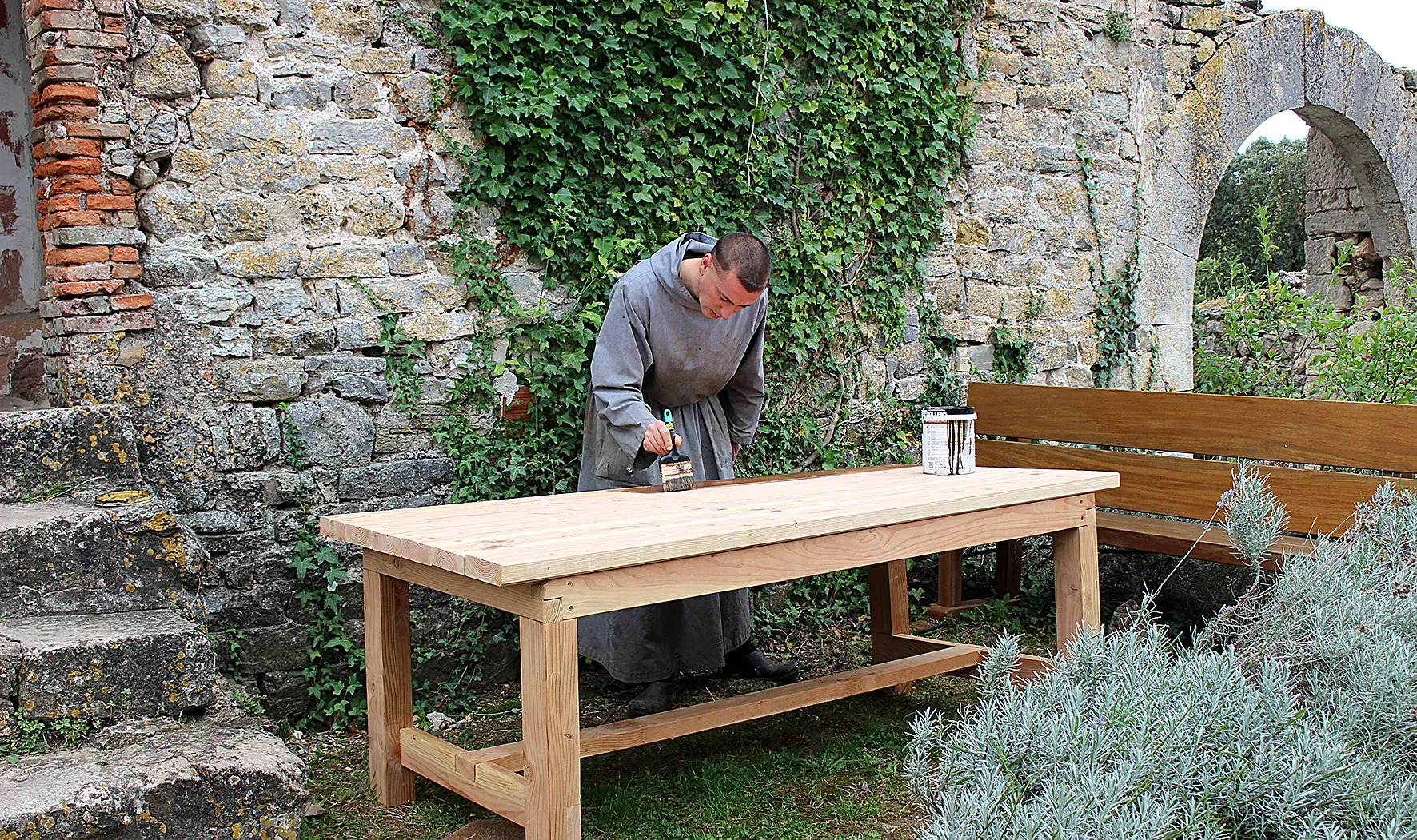
The property extends over 33 hectares, largely wooded, with a vegetable garden and poultry farming. The monastery is a historical monument that has become a living monument once again since the arrival, in 2020, of the Benedictine monks. Many visitors are welcomed to discover part of the buildings and grounds, and also to share a bit of the life of the monastery, particularly through Catholic worship celebrated in the ancient liturgical forms (in Gregorian).

Known today as Saint-Christophe, the site on which the monastery is located has its origins in the Roman era, mainly as an agricultural barn in the medieval period.” La Gazette du Var met with Father Prior Dom Alcuin and Frère Gérald. “The property lies more or less on the ancient Roman road that went around to Rome, Marseille, Nice and Aix.
It made it possible to reach other lands, especially in winter,” explains Frère Gérald. He adds: “The Benedictine monks are the first confirmed religious monastic presence. This mention appears in a cartulary of the Abbaye Saint-Victor de Marseille, recording a donation in 1025 of the entire property with the church.”
Advertisement
Around the middle of the 12th century, the monks were replaced by the Templiers who were soldier-monks, thus ensuring the security of the farm buildings and the church. After the suppression of the Templiers at the beginning of the 14th century, it was the Chevaliers de Malte who inherited the property.
Other buildings were constructed, including a side chapel at the back of the church, a refectory, and a vaulted cellar with a wine vat. According to the visitation registers of the period and the study of the existing buildings, the site served the offices that punctuate the day; you will hear almost the same chants as in the 10th century. This link with the past is tangible both in the buildings and in the life led within the monastery.
“We have the grace of having a harmonious building with Romanesque arches and apses that give meaning. We are very happy to welcome passers-by and to share a bit of our life in our public offices in order to bring something to them. We are not a parish, we are a monastery.”
“It is a life made of prayers, intellectual and manual work.”

AGRICULTURAL ACTIVITY The religious continued: “The site was sold and, as mentioned in the so-called Napoléonien land registry of 1838, the church was transformed into housing and the other buildings were used for livestock. The property was long exploited for agricultural purposes. It was in the 1980s that a new owner, passionate about history, decided to restore the place and expand it.”
“In 2020, an international Benedictine community settled in. It opened the church for worship for the first time since the Revolution, on the feast of the Assomption. The community of monks itself owns and is responsible for the development and restoration of the property.”
Indeed, the monastery welcomes the public according to capacity, as buildings still need to be restored, and in respect of the monastic life.

DUTY OF PRESERVATION The Father Prior continued: “The community is the guardian of these buildings. The monks are aware of their duty to preserve and restore them in accordance with the guidelines established by civil authorities so that the testimonies of faith and culture of those who built them, several centuries ago, are made available to future generations. The surest way to achieve this is to ensure the life of these buildings.”
Advertisement
“A life in harmony with their architecture and original purpose. We are very grateful because Pierre Bertrand, the former owner, saved the building. He was passionate about old buildings and had invested a large part of his life in them.”
“On July 11th, we will celebrate the thousandth anniversary of the arrival of the Benedictines in Brignoles!”
A work of restoration The monks are working with the authorities to restore and expand the buildings in order to house a functional monastic community with space for guests and retreatants, as well as facilities to welcome individual or group visitors. The project is ambitious, and the community is encouraged by the support received from France, from all over the world, and obviously has the support of the mayor of Brignoles. Any donations will be used to supplement the modest income the monks can generate, and in particular will be used to meet the expenses related to the restoration of this historical monument.
Interview and photos by Laurette PARAY.