“Remembering to Build Peace”
On May 8, François de Canson paid tribute to those who liberated France and recalled the importance of active memory in the face of today's threats.
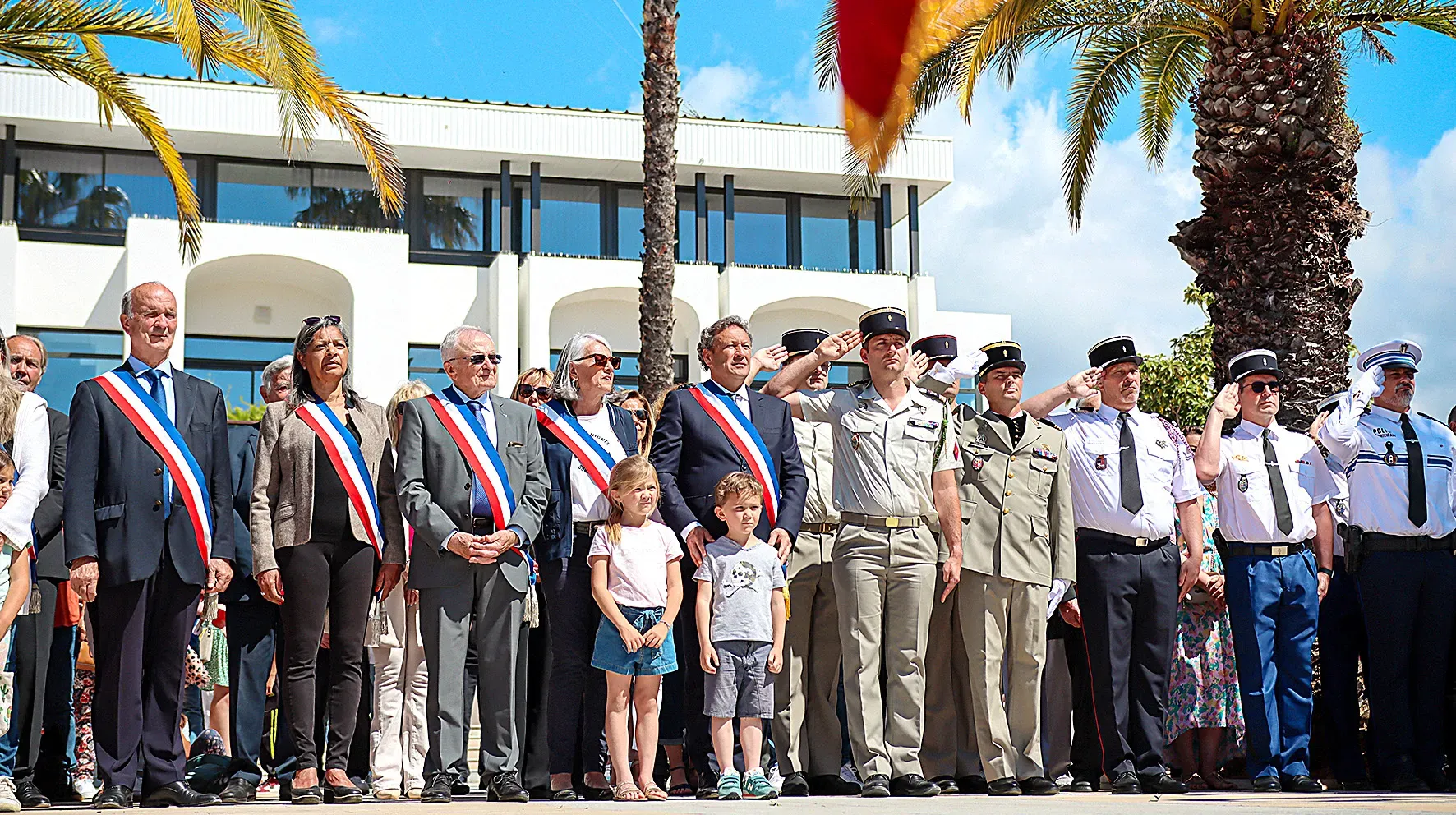
On May 8, 1945, at 3 p.m., the voice of General de Gaulle echoed on the radio. He announced the end of the fighting in Europe, marking the unconditional surrender of Nazi Germany. A world war was ending, after costing the lives of more than 50 million people.
80 years later, these words of gratitude and pride continue to resonate: “Not an effort of its soldiers, its sailors, its airmen, not an act of courage or self-sacrifice, not a sacrifice, not a tear will therefore have been lost.” François de Canson revived this memory, paying tribute to the resistance fighters, combatants, deportees, and all victims of this global tragedy. “Honor forever to our armies and their leaders!
Honor to our people, whom terrible ordeals could neither break nor bend!” also declared General de Gaulle.
Advertisement
The invasion of Poland in September 1939 triggered a lightning war. The German army swept through Denmark, Norway, the Netherlands, Belgium... and ended up shaking France in June 1940. Under shock, the country entered the dark era of the occupation.
But in the shadow of defeat, voices rose. A man, still unknown, refused to give up. General de Gaulle reached London and, from June 18, 1940, called on the French to resist from the airwaves of the BBC.
Throughout the country, women and men, believers or not, workers, engineers, teachers, or peasants, went underground. Under the impulse of Jean Moulin, the Resistance organized. The Republic did not fall silent.
WORLD WAR, UNIVERSAL RESPONSE The conflict became international as in June 1941, Hitler turned against the URSS, then in December, Japan attacked Pearl Harbor. It was a global conflagration. Facing the Axis powers, a coalition arose: the URSS, the United States, the United Kingdom, and Free France – very present on all fronts thanks to the commitment of the French from overseas and mainland France.
It was this determination that allowed France to sign, on May 8, 1945, in Berlin, the act of surrender of the 3rd Reich, alongside the great allied powers.

But peace was dearly bought. And, victory does not erase the pain. François de Canson recalled, with emotion, the human cost of the conflict: the twenty million dead soldiers, the decimated civilian populations, the deportees, the internees, the broken families.
“We think of those who never returned... of those who suffered more than any war had ever made them suffer,” added the mayor. Peace, although achieved, left behind a Europe in ruins and a bruised, traumatized humanity.
Europe was also a promise of reconciliation. From this chaos, however, a hope was born. Churchill, in his famous Zurich speech in 1946, called for building a “European family”.
Advertisement
Visionary men – Robert Schuman, Jean Monnet, Konrad Adenauer, Alcide De Gasperi – answered this call, laying the foundations of what would become the European Union.
“We cannot continue to carry into the coming years the hatred and the desire for vengeance as they were born of past injustices. [...] The first step towards the creation of the European family must consist in making France and Germany partners.
One cannot imagine a renaissance of Europe without an intellectually great France and an intellectually great Germany,” declared Churchill.
Memory is also a bulwark against forgetting. François de Canson insisted: “Of course, the world has changed. Of course, a new Auschwitz seems unthinkable. And yet...”.
Hate speech is resurfacing, as are the temptations of division. That is why the duty of remembrance is not a simple commemoration: it is a commitment. One to transmit, to alert, to defend democratic values. “Freedom only exists where intelligence and courage bite into fatality,” he states with strength.
The message is clear: “Let us be worthy of those we honor. Let us remain vigilant, active, courageous. Let us refuse resignation and indifference. Let us oppose conviction to violence, solidarity to vengeance,” concluded François de Canson.
A vibrant appeal to everyone's conscience, so that barbarism and hatred never triumph over humanity.


Photos Isabelle BENOIT.