The challenges of maritime defense
On June 12 in Toulon, François de Canson of Région Sud opened the new I-NAVAL edition at Tour Royale, highlighting the importance of maritime defense.
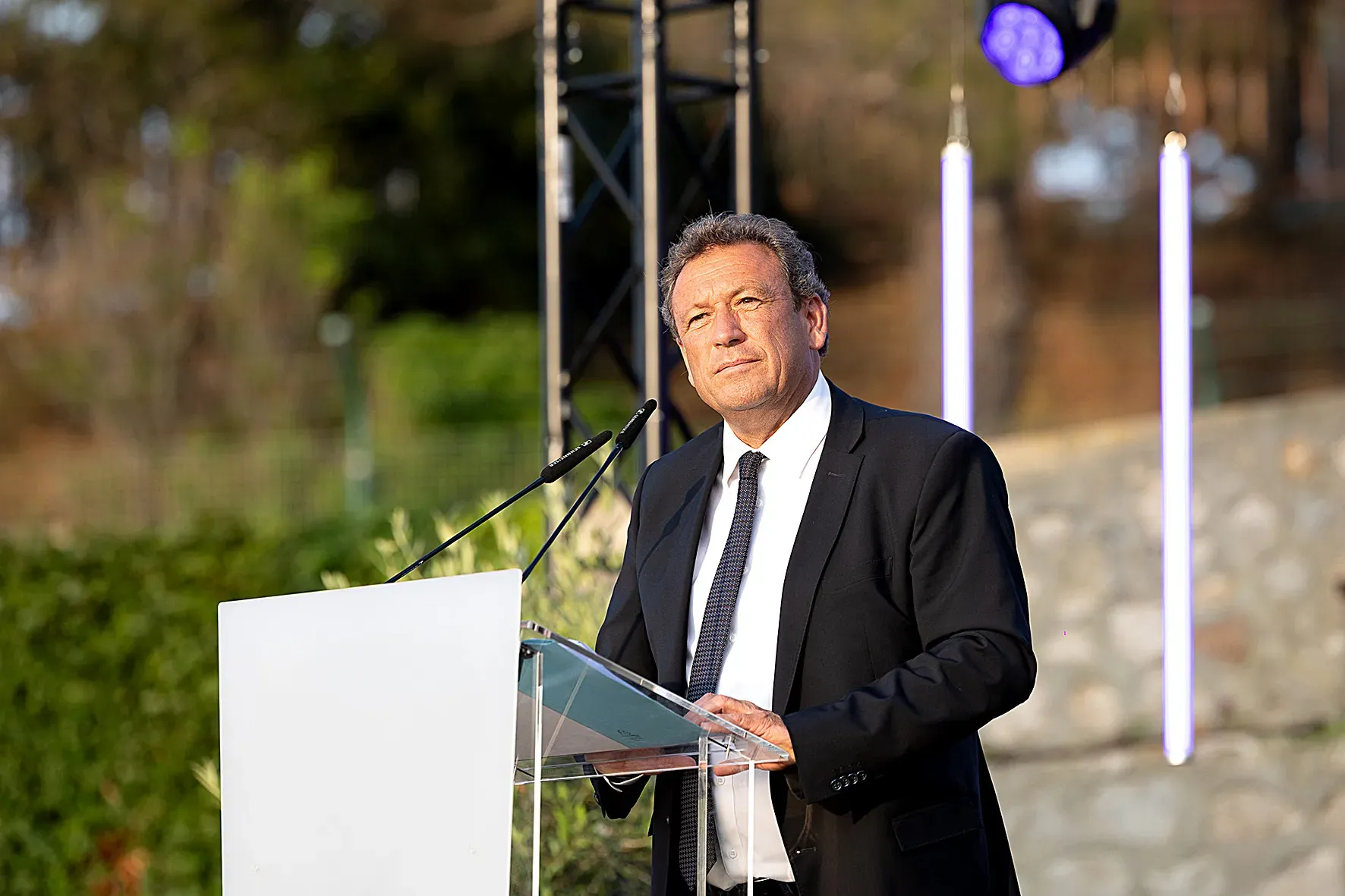
Tour Royale in Toulon, an iconic site of French maritime history, hosted this new edition of I-NAVAL. On this occasion, François de Canson recalled that this historic site is a symbol of French naval power: "It is here, facing the harbor, that France is accustomed to asserting its maritime sovereignty," he hammered, before highlighting the need to anticipate future threats and develop innovative technologies to strengthen France's maritime sovereignty.
He also stressed the importance of cooperation between the different players in the sector, including university laboratories, military schools, innovative SMEs, and the armed forces.
INNOVATION AT THE HEART OF DEFENSE The vice-president of the Région also insisted on the importance of innovation and anticipation to face new threats. "The defense of tomorrow cannot be improvised. It is being designed today," he stated.
Advertisement
He also highlighted that I-NAVAL is an event focused on simulation, experimentation, and demonstration, driven by DGA-TN and Université de Toulon, and supported by Région Sud.
Furthermore, François de Canson put forward a model of territorial sovereignty supported by the local ecosystem. He stressed the importance of the direct link between research, industry, and the armed forces. "We have embraced this model with the Plan VALEURS, putting sovereignty, security, and responsibility back at the center of our public policies," he declared.


Le vice-président de la Région a également insisté sur l’importance de l’innovation et de l’anticipation pour faire face aux nouvelles menaces. « La défense de demain ne s’improvise pas. Elle se dessine aujourd’hui », a-t-il affirmé. Il a également souligné que I-NAVAL est un événement tourné vers la simulation, l’expérimentation et la démonstration, porté par la DGA-TN et l’Université de Toulon, et soutenu par la Région Sud. Par ailleurs, François de Canson a mis en avant un modèle de souveraineté territoriale appuyé laboratoires sur l’écosystème local. Il a souligné l’importance du lien direct entre la recherche, les industriels et les forces armées. « Ce modèle, nous l’avons assumé avec le Plan VALEURS, en remettant la souveraineté, la sécurité, la responsabilité au centre de nos politiques publiques », a-t-il déclaré. Aussi, la Région Sud prolongera cette stratégie avec le vote du Plan Sud Défense, dès la fin de ce mois. Ce plan vise à faire de la région un territoire de l’économie de guerre, structuré, financé et capable de faire émerger des solutions à haute valeur stratégique et duale.
Therefore, Région Sud will extend this strategy with the vote on the Plan Sud Défense at the end of this month. This plan aims to make the region a structured, funded territory of the war economy, capable of bringing forth high-value strategic and dual-use solutions.
INTERNATIONAL REQUIREMENTS During the Conférence des Nations Unies pour l'Océan (UNOC) in Nice, Renaud Muselier recalled that control of the maritime space is a condition for peace, resilience, stability, and influence. François de Canson stressed that the actions undertaken in Toulon are a response to this requirement.
I-NAVAL is also a lever for raising awareness. François de Canson stressed that tomorrow's defense will need young talent, scientific vocations, and hybrid profiles.
Finally, François de Canson asserted: "The defense of tomorrow will be neither industrial, nor military, nor academic; it will be all of these at once. The defense of tomorrow will be systemic, territorialized, digitized, and connected to its resources and intelligence.
Région Sud is proud to support I-NAVAL, alongside the DGA and the Université, in this symbolic place where history meets innovation, and where the sea becomes a laboratory for the future. Indeed, the sea only yields to those who prepare for it.
Today, we take on this responsibility."


Photos Philippe OLIVIER.