François de Canson: “The Republic is not a ministry, it is a mayor, a classroom, a...
On October 17, in Draguignan, during the 8th Convention of Municipalities and Intermunicipalities of Var, organized by AMF 83 and dedicated to secularism,...
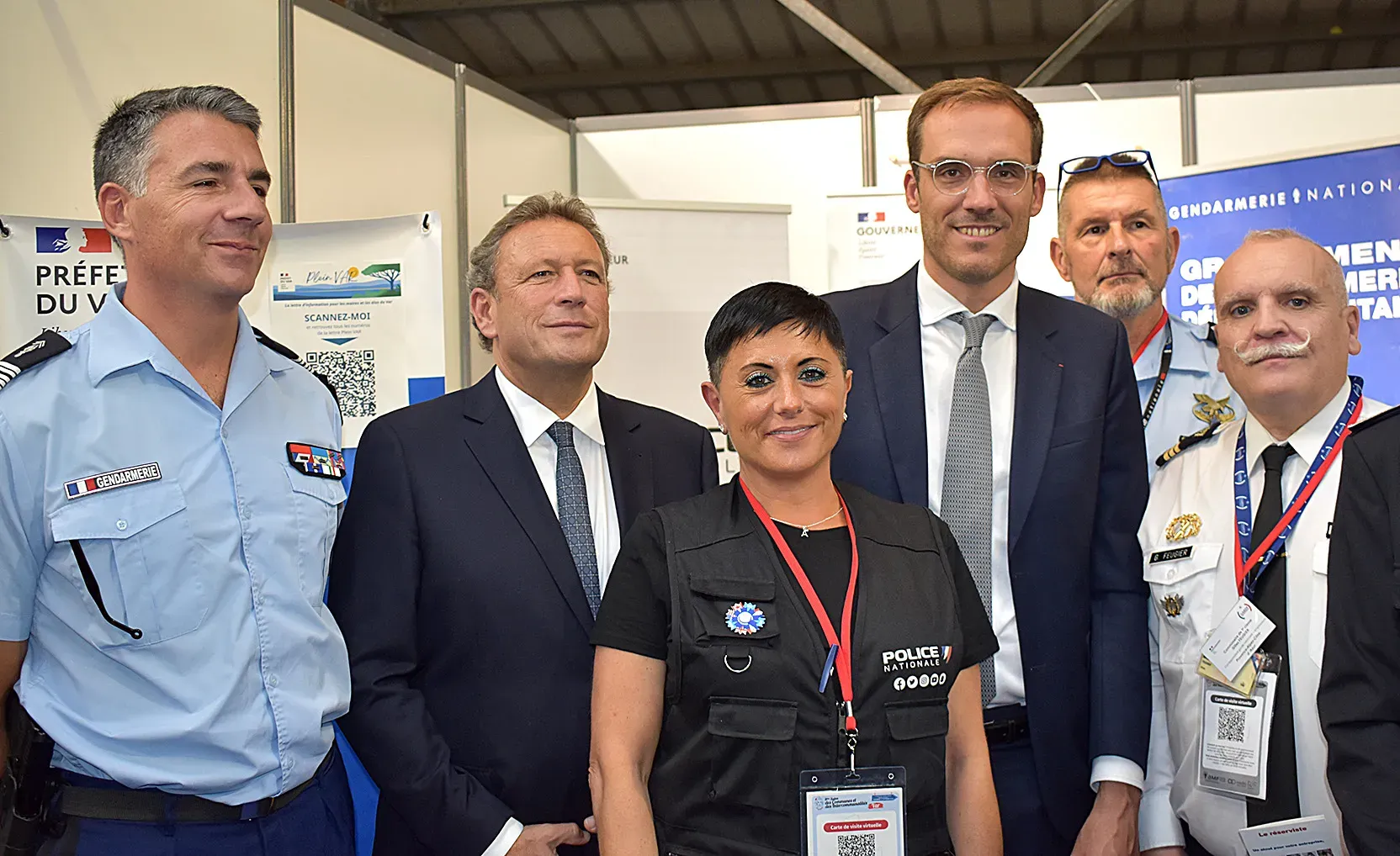
Focused on the themes of secularism, the Republic, and decentralization, on this October 17, the convention was a moment of reflection in memory of Samuel Paty, murdered five years ago, on October 16, 2020, for having taught freedom.
CONTEMPORARY SHIELD

Hence the reminder given by François de Canson: “The Republic also mourns Samuel Bernard, an art teacher killed in Arras for embodying the values of the republican school. Two teachers, two faces of the same mission: to transmit and to make people think freely. Two victims of the same fanaticism. Islamist terrorism strikes where everything begins: in our schools, our middle schools, our town halls, where the Republic is passed on. And today, the world's conflicts — from Gaza to Ukraine — invite themselves into our streets, our universities, our social networks. What yesterday seemed far away is now burning at our gates. In the face of this, secularism is not an ancient word, it is a contemporary shield. In the face of this, secularism is not a topic for a symposium: it is a duty to fight. It does not oppose, it protects. It is not against religions, it is above them, to allow everyone to believe or not to believe without ever having to clash, without anyone imposing their law on the Republic. It is the bedrock of our national unity. And this fight is not just for ministries, nor just for laws. It is that of mayors, teachers, parents, of all those who still believe that the Republic is a promise stronger than hatred.”
DEFENDING HUMAN DIGNITY
Therefore, the Région Sud will organize a major regional Agora on October 29 dedicated to the fight against antisemitism and hatred. For François de Canson, defending secularism means defending human dignity and living together: “We know it: the Republic does not die from a great collapse. It is damaged by small, successive surrenders. One silence too many, an easy accommodation, a habit of ‘it's not that serious.’ Every time we look away, let a threat pass, or trivialize a principle, we retreat a little. And while active minorities impose their noise, their anger, their certainties, the silent majority — the one that works, raises its children, still believes in common sense and living together — bows its head, tired, weary, anxious. This majority is the real France, that of the municipalities, schools, families, associations, local elected officials. It is the one that does not shout, but acts. It is the one that sometimes doubts, but always holds on. And it is this majority, today, that must be heard. Because it embodies the everyday Republic, the one that asks for neither privilege nor spectacle, but for respect and consistency. We can no longer let a few speak for everyone. We cannot let the noise of extremes drown out the voice of reason. We cannot let fear dictate the law in people's minds. It is up to us, local elected officials, to restore confidence to this silent majority, to tell them they are right to still believe. Because it is this majority, in the end, that keeps France standing.”
IN THE STORM, MAYORS ARE THE DIKE
Recalling that mayors are the first faces of the Republic, François de Canson insisted: “When everything vacillates, it is to you that the country turns. It is you who appease anger, who support the inhabitants, who carry republican values in proximity and the truth of the field. And in this moment of uncertainty, the municipalities, the departments, the regions are the only poles of stability of a tired France. This is where the debate opened by Sébastien Lecornu on decentralization takes on some meaning. His desire to clarify competences and put local authorities back at the heart of the game is right, necessary, perhaps courageous. But it must go to the end of its logic. And to achieve this, he would benefit from drawing inspiration from the vision expressed this week by Jean-Louis Borloo. Borloo speaks of a France suffocated by its own controls, ‘where 400,000 decrees and procedures paralyze action.’ He calls to ‘unblock everything,’ to lay the country flat, to let France breathe. To entrust to the territories what Paris no longer knows how to do: housing, education, health, proximity, local innovation. It is not an abandonment of the State, but a French-style refoundation, but a State refocused on its sovereign missions: security, justice, defense, diplomacy. And territories fully responsible for the rest: daily life, the economy, youth, culture, ecological transition. This is the modern Republic. This is the France we love: proud, free, confident in its municipalities.” He added: “Since 2015, Renaud Muselier has made this idea a practice. ‘Nos Territoires d’abord’ is not a slogan, it is €1.4 billion of investments in 5,000 municipal and intermunicipal projects. In Var, more than €340 million has already been committed to support projects: roads, schools, local hospitals, culture, security, agriculture, environment. Because in the South, we do not theorize decentralization, we live it. As the Regional Convention of Mayors in Aix-en-Provence on November 27 will show. It is often said that we are an epic people. When France breathes, it moves forward, it invents, it leads. Let us not let fear or bureaucracy steal this energy. Let us continue to believe in our municipalities, in our schools, in our values. Let us continue to keep secularism alive not as a constraint, but as a freedom. And above all, let us continue to show that the Republic is not a ministry, it is a mayor, a classroom, a village, a region,” concluded François de Canson.
Photo Alain BLANCHOT.