Jean-Louis Masson: "Solidarity cannot be an adjustment variable"
Jean-Louis Masson warns about the financial difficulties of Departments due to social costs transferred by the State.
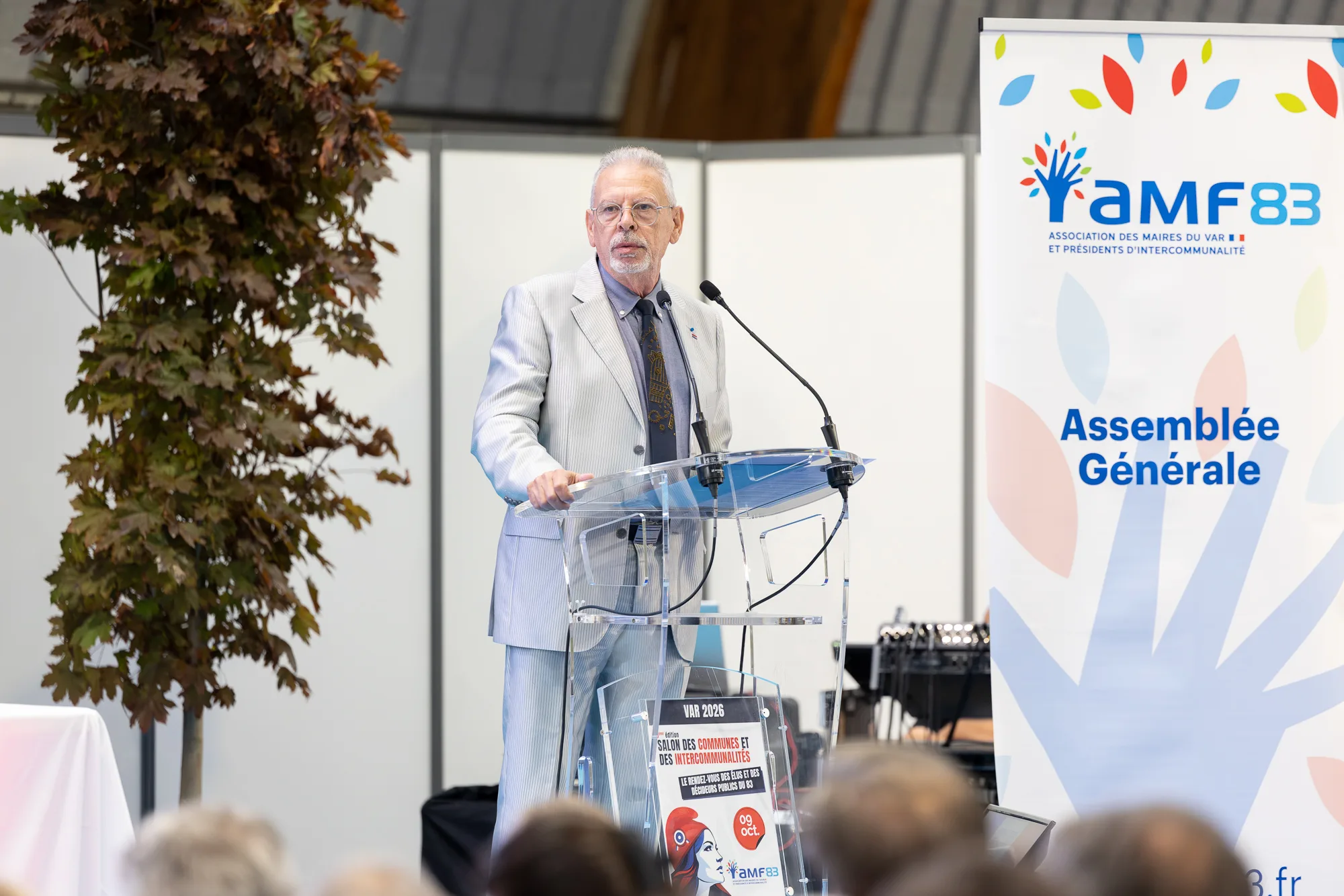
On October 14, 15 and 16, Marne hosted the 95th Assises des Départements de France. An opportunity for Jean-Louis Masson to defend the Départements once again.
Behind budgets, lives
What does decentralization mean concretely for a child in foster care, a dependent elderly person or a person with a disability? In Var, these questions are not lines in a budget. They are lives.
When a child is entrusted to the Aide sociale à l'enfance, our responsibility is to give them protection, but above all a chance. When an elderly person can no longer stay at home alone, APA helps fund the assistance they need. When a person with a disability requests PCH, behind an administrative file, there is often a family simply trying to live normally.
Advertisement
That is what the Département is. A local authority that intervenes when life gets harder. But this solidarity comes at a price. And that is where the current system reaches its limits.
Needs evolving faster than funding
Over the decades, the State has entrusted the Départements with increasingly important responsibilities. Child welfare (Aide sociale à l'enfance) with the major decentralization laws of 1983-1984. RMI in 2004, which became RSA in 2009. PCH in 2006. APA in 2002.
On paper, these transfers were accompanied by compensation mechanisms. In reality, needs evolved much faster than funding.
The example of RMI is enlightening. In 2004, the first year of the transfer, the Départements spent nearly 5.4 billion euros, compared to initial compensation of 4.94 billion. A gap of nearly 457 million euros in the very first year, ultimately taken back by the State.
Why is it important to recall this? Because it shows that the problem is not new. And above all because today, the Département does not always control the parameters that determine the expenditure it must nevertheless fund.
In Var, we see this every day. Our department has over a million inhabitants. It faces significant aging of its population and considerable social needs. We must support the elderly, support people with disabilities, protect children entrusted to ASE, and guide RSA beneficiaries towards employment. And behind every policy, there are faces.
A financial question that has become political
I think of those young people we recently received at the Conseil départemental to congratulate them on obtaining their brevet, CAP, BEP or baccalauréat while being cared for by the Aide sociale à l'enfance. For them, a few hundred euros invested in support can represent much more than an expense: it is sometimes the first proof that the Republic believes in their future.
I also think of families facing a child's disability, for whom PCH is not an abstract benefit: it is concrete help to adapt housing, fund equipment, or allow greater autonomy.
Advertisement
Finally, I think of our seniors and their families, for whom APA can make the difference between staying home in good conditions and having to give up that independence.
So we do not want to reduce these expenses. We want to be able to continue assuming them with dignity. That is precisely why the financial question has become a political question.
Because when solidarity expenses increase faster than the revenue available to the Départements, money must be found somewhere. And every extra euro spent on an insufficiently funded national competency is a euro that can no longer be spent on a departmental road, a middle school, a rural municipality, fire prevention, or investment.
It is not a choice between solidarity and roads. It is a choice between a solidarity we want to continue developing and a financial system that progressively prevents us from doing so.
Trusting those who know the field
Var has chosen not to submit. We are experimenting with new solutions, particularly in child protection. We are developing employment support with Var-insertion emploi. We are investing in our middle schools, our roads, and our municipalities. We are strengthening our solidarity policies.
But in return, we ask for something simple: that the State assume its share. I do not believe in a Republic that does everything from Paris. I believe in a Republic that trusts those who know the field.
The Département is precisely that local authority. We know how much a placement in an institution costs. We know what supporting a child represents. We know the difficulties of a family facing disability. We know what our municipalities and rural territories experience.
So let us give ourselves the means to act. The question is not whether the Département wants to pay less.
The question is whether tomorrow, we want a Department President to still be able to say to a family: "We are going to help you", without being forced to answer them a few months later: "We no longer have the means."
For my part, I refuse this prospect. Solidarity is a responsibility. We assume it. But national solidarity must remain… national.
And that is why I will always defend a simple rule: to every responsibility must correspond a sufficient, sustainable, and controlled resource. Because behind the figures of a budget, there is always a person. And it is precisely for these people that we must defend the Départements.
Jean-Louis Masson, President of the Département du Var.