François de Canson: 'Antisemitism is not an opinion, it is a poison'
As Simone Veil said: 'Antisemitism is never a Jewish problem: it is a national problem.'
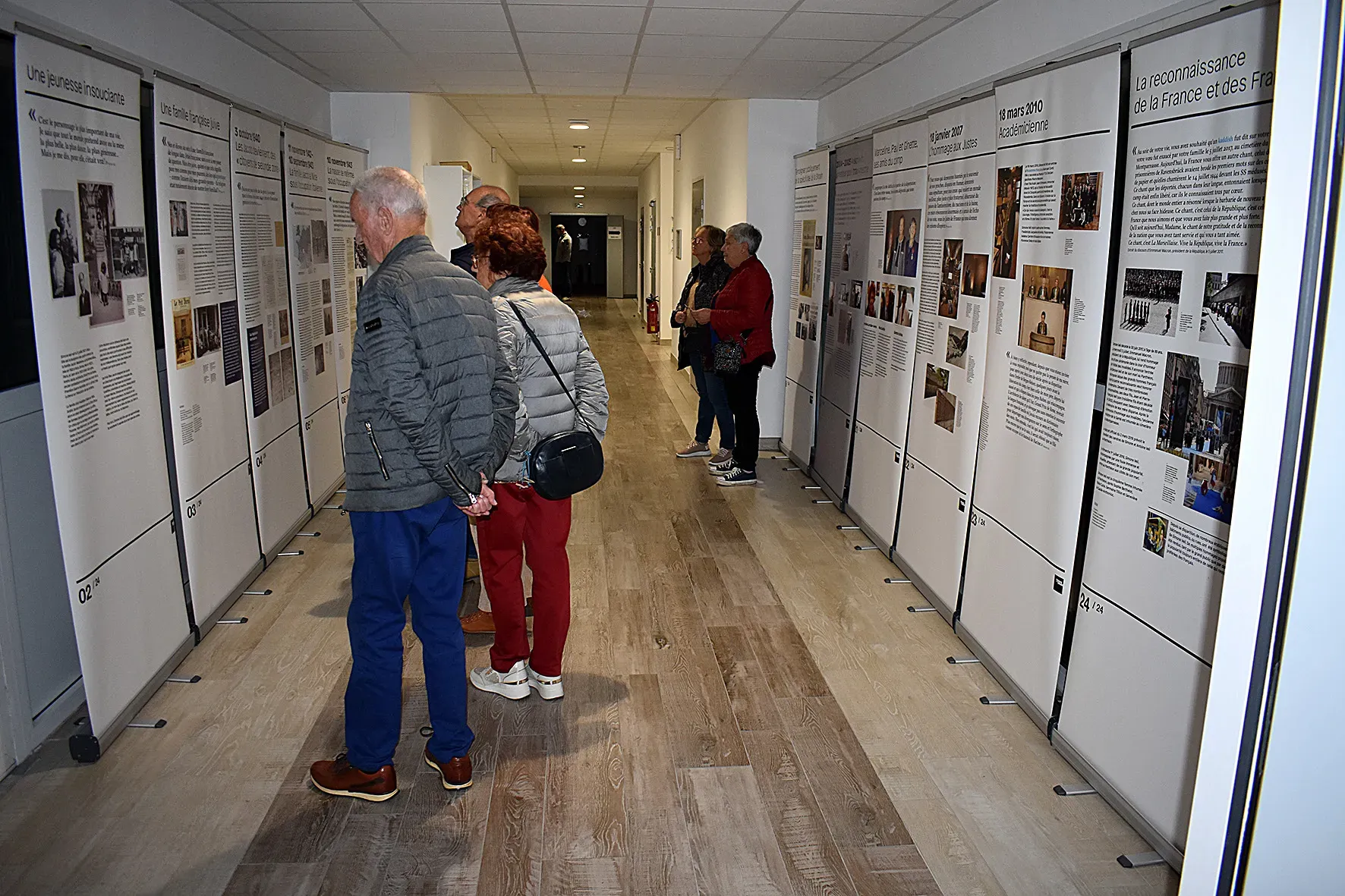
There are moments, in the life of a town, when time seems suspended. Moments when ordinary places become places of memory, and when speech must rise to the height of what we honor. It is in this spirit that the exhibition dedicated to Simone Veil by the Ville and the Mémorial de la Shoah was held: 'Simone Veil, a destiny 1927 – 2017'.

An exhibition that retraced the life and commitment of this emblematic political figure. MORAL FIGURE As François de Canson, the mayor, recalled during the inauguration: 'La Londe-les-Maures is not just hosting an exhibition. It is hosting a moral figure.
A trajectory of France. A light in a century of shadow. 'We honor Simone Veil.
Advertisement
'We must transmit,' she said. So let us transmit. Let us transmit truth, dignity, high standards.
Let us transmit without trembling, because certain lives call not for praise, but for loyalty.
Simone Veil was a young Mediterranean woman. A child of the South. A daughter of Nice, shaped by this unique light that bathes our sea — this Mediterranean, a sea of encounters and wounds, but always a sea of new beginnings.
That sea, which mixes cultures, languages, and destinies, shaped in her an acute sense of human fragility and fraternity. Perhaps it was this Mediterranean light that she carried with her even into the darkness. For Auschwitz was absolute night.
The negation of humanity, the destruction of dignity, the experience of nothingness.' In the heart of this night, Simone Veil kept within her something tiny: a slender thread of light. A glow so fragile that it could have gone out a thousand times — and yet which kept her alive.
This is the first lesson she offers us: light does not always win by its strength — it wins by its persistence.

Simone Veil was also a survivor who never accepted that barbarism should have the last word. She could have retired into silence. She chose to speak.
THE CHOICE OF JUSTICE 'She could have protected herself from the world. She chose to transform it. She could have yielded to hatred.
Advertisement
She chose justice. Her resilience was not merely psychological; it was philosophical. It stemmed from that ancient wisdom that distinguishes vengeance from responsibility, indignation from anger, memory from resentment.
She knew that the Shoah was not a chapter of the past, but a spiritual fracture in human history. A wound that does not heal, but which can enlighten — like those scars that become lines of strength. She would say later: 'There are things that we must never accept, never justify, never explain'.
This sentence is a moral compass. It obligates us. It crosses generations,' François de Canson insisted further.


While France has just commemorated the 80th anniversary of the Shoah, and while insinuations, falsifications, and rewritings of history are returning, we must restate what Simone Veil knew better than anyone. 'Antisemitism is not an opinion, it is not a debate: it is a poison. It is Europe's oldest poison, the universal marker of the moral collapse of societies.
And this poison that we thought was diluted is today flaring up. It flares up in schools when a child is insulted because of a first name. It flares up in the street, on the pretext of a conflict triggered by Hamas.
It flares up in rumors, conflations, misdirected anger. It flares up in the manipulations of influencers who transform their ignorance into dogma. It flares up in those small cowardices, in those daily renunciations, in the convenient silences which, put end to end, manufacture disasters.
It flares up in political exploitation, in unworthy instrumentalization, in these cultivated confusions that undermine national cohesion,' the mayor concluded.
Photos Alain BLANCHOT.