François de Canson: 'Territoire engagé pour la Méditerranée', a call for collective action
Faced with climate and economic challenges, the 'Territoire engagé pour la Méditerranée' initiative aims to unify local maritime policies.
T
Parcs Naturels Régionaux, Risques, representing Renaud Muselier, president of the Région, chaired the General Assembly of the Parlement de la Mer in the presence of François de Canson, vice-president of the Région in charge of economic development, attractiveness, tourism and major risk prevention, Roger Roux, regional councillor delegated to marinas, and François Fouchier, Regional Delegate of the Conservatoire du Littoral Provence-Alpes-Côte d'Azur.

After an assessment of the actions carried out since the creation of the Parlement de la Mer in 2022 and the presentation of the 'Accords pour une Méditerranée durable', the Assembly highlighted the concrete commitment of the Région to protecting the Méditerranée. Over the past three years, €6.6 million in regional aid has been mobilized to support marinas certified 'Ports Propres', and €30 million has been invested under the Escales Zéro Fumée plan to enable the on April 1st, Christophe regional councillor and president of the Commission Biodiversité, mer et littoral, electrical connection of ferries and cruise ships of Madrolle, at dock. 'In the face of climate change, urban pressure on the coasts, and the weakening of ecosystems, the municipalities of the Méditerranée coastline are on the front line. Starting from the observation that isolated actions are no longer enough, a new initiative is being launched to federate energies and structure a common vision. Supported by the Région Sud and AFNOR within the Parlement de la mer, the "Territoire engagé pour la Méditerranée" approach was presented as an absolute necessity for the future,' recalled François de Canson. 'The Méditerranée is not just a horizon. It is a responsibility, an identity, a common destiny,' he added during a founding speech, emphasizing the urgency of moving from a logic of scattered actions to a collective strategy.
THE EXAMPLE OF LA LONDE-LES-MAURES
Presented not as 'one more norm' but as 'a tool for transformation', this approach is built around three major challenges: strengthening maritime identity among populations and decision-makers, ensuring sustainable management of coastal and maritime areas, and finally, stimulating the development of the blue economy. For mayors and their teams, it is intended to be a concrete lever at several levels. On the political level, it offers a framework to build a clear maritime policy and coordinate municipal services. In terms of human resources, it helps structure teams, value the work of agents, and strengthen skills through training. Finally, on the technical and financial levels, its purpose is to simplify access to information and more effectively coordinate the many existing support mechanisms. As the first municipality to obtain this certification, the municipality of La Londe-les-Maures shared its experience, as explained by François de Canson, its mayor: 'This is not a medal. It is a method. Already active with its two ports, Miramar and Maravenne, certified "Ports Propres", the municipality was able, thanks to this new approach, to take a decisive step. We moved from concrete actions to a real overall strategy.' 'This method made it possible to mobilize all municipal services, from tourism to the environment, including economy and education, in order to give global coherence to the city's maritime policy. The results are reflected in exemplary port management, targeted actions for the protection of the coastline and the Méditerranée including: The development of new fuels to decarbonize shipping fleets, The development of renewable marine energies with the Éolien flottant project, A 100% Sud labelling with 'Valeurs du Sud' signage in ports to promote products, support fishermen, and guarantee flawless traceability, Controlled tourism to preserve the coastline with the multimodal 'Visiteur' pass: facilitating sustainable mobility and structuring new routes, particularly around the coastal cycling route: 500 km of cycle paths between Gard and Nice. posidonia meadows, responsible beach management, and increased support for maritime professions. The main contribution, according to the elected official, is to have acquired an 'overall vision', deemed essential today.' Building on this initial success, an appeal was launched to all coastal municipalities. Municipalities like Théoule-sur-Mer, near Cannes (Alpes-Maritimes), have already joined the movement. For the communities that commit, the approach promises a clear roadmap, adapted tools, training programs, and integration into a collective dynamic at the scale of the Région Sud. The stated ambition does not stop at regional borders, however, with a desire to bring this model to the European scale in the coming years. 'The Méditerranée is a common good. It deserves better than fragmented policies. With "Territoire engagé pour la Méditerranée", we are moving from an addition of actions to a real strategy. It is in this way, together, that we will build the future of our Méditerranée,' concluded François de Canson.
The regional elected officials also announced the prospects for the
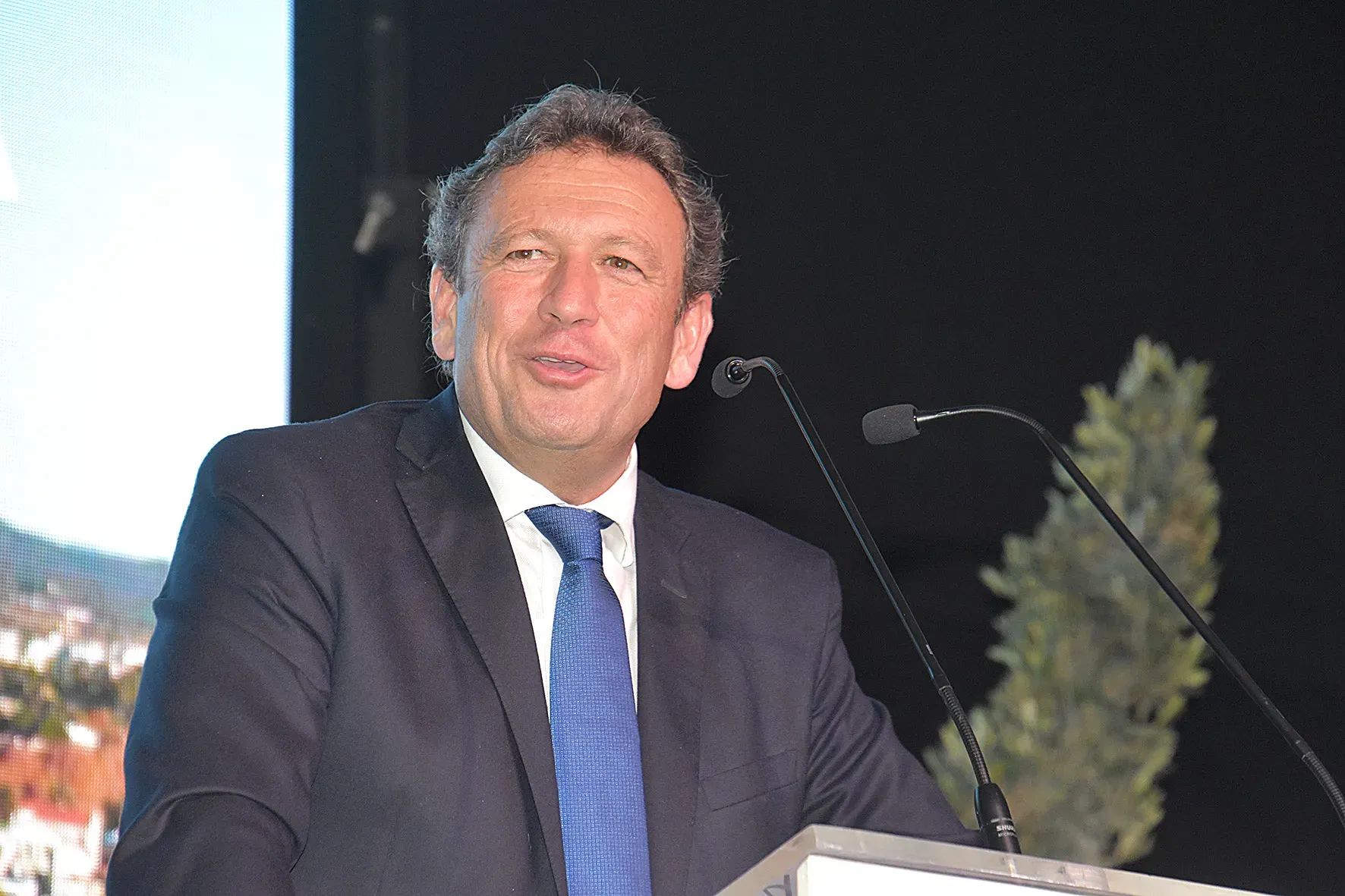
Photo Alain BLANCHOT.