The sea fuels our regional development
An INSEE study confirms the leading position of the Région Sud in the maritime economy, with over 100,000 jobs.
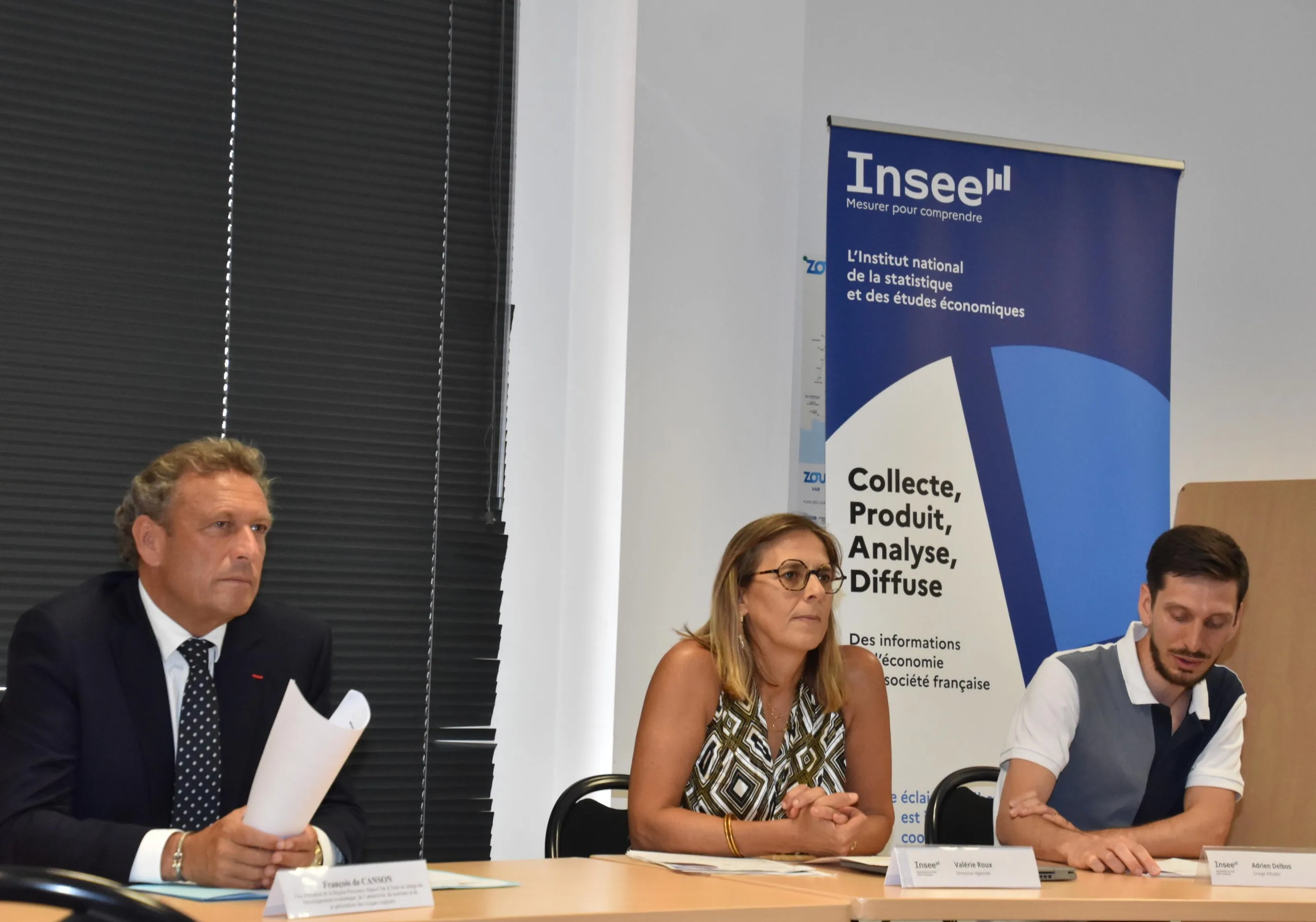
On July 16 in Toulon, the Région unveiled an in-depth study by INSEE that provides a detailed overview of its maritime economy.
Presented by François de Canson, vice-president of the region, alongside Valérie Roux, regional director of INSEE, and Olivier Tessier of the Dreets, the analysis confirms the status of the Région Sud as France's leading maritime power.
Far from being just one sector among others, the sea is revealed as a complete ecosystem that fuels the entire territory.
Advertisement
“Relevant public policy always begins with a good knowledge of the territory. We do not prepare the future with intuitions. This study constitutes a 'real decision-making aid tool' to adapt public policies to economic realities and anticipate future needs,” emphasized François de Canson.
An ecosystem of over 102,000 jobs
The main finding of the study is the considerable weight of the blue economy. While the strict scope of maritime activities (excluding tourism and the Marine nationale) represents 25,600 employees at the end of 2022, the figure skyrockets when a broader view is adopted.
By integrating coastal tourism (62,200 jobs) and the Marine nationale (14,200 jobs), more than 102,000 direct jobs are linked to the sea.
“The study shows us that we must look at these activities as a real ecosystem. The sea is not just an economic sector among others. It fuels the entirety of our regional development. Two sectors concentrate nearly four out of five salaried jobs: maritime and river transport (11,900 jobs), mainly located in the Bouches-du-Rhône (90%), and shipbuilding and repair (7,900 jobs), whose heart beats in the Var (72%),” insisted the vice-president of the region.
Beyond volumes, the maritime economy is distinguished by the quality of its jobs. The sector employs a share of executives (40%) significantly higher than the regional average (16%) and offers an average monthly net salary of €3,910, compared to €2,470 for the regional economy as a whole.
The establishments are also larger in size, with an average of 21 employees compared to 10. This structure around large companies and innovative SMEs drives qualifications and compensation upwards.
An industrial, digital, and strategic power
“The strength of the Région rests on unique assets: the leading French commercial port in Marseille, the leading naval base in Europe in Toulon, and a position as the fifth global hub for digital connections thanks to submarine cables. We sometimes forget that major digital routes also pass under the sea. An essential share of data exchanges between Europe, Africa, the Middle East, and Asia currently transits through our region,” recalled François de Canson.
This power relies on world leaders such as CMA CGM or Naval Group, a dynamic network of SMEs, notably in yachting (€1.1 billion in turnover), and a leading research ecosystem with institutions like Ifremer and the Pôle Mer Méditerranée.
Advertisement
Also, the study highlights the challenges to be met to maintain this leadership. The first is that of skills, with growing needs for technicians, engineers, and specialists to support technological transformations. The second challenge is to reconcile the multiple uses of the coastline (industrial, tourism, military, environmental).
“The Région Sud has already initiated several actions to address this: the Opération d’Intérêt Régional Économie de la Mer, the Parlement de la Mer for shared governance, or the Garde régionale marine for awareness. Programs like 'Ports Propres' and 'Escales Zéro Fumée' position the region as a reference in terms of ecological transition in maritime transport. Preserving the Méditerranée is not a brake on development. On the contrary, it is the condition for its future competitiveness,” stated the mayor of La Londe-les-Maures.
“Knowledge is never an end in itself. It is the starting point for public action,” he concluded, reaffirming the Région's determination to use this study to build the future of its maritime economy.

Photos Alain BLANCHOT.