Max Bauer: 'Protecting agricultural land, but not at any cost'
On April 2, Max Bauer, president of the Coordination Rurale du Var et de PACA, attended the municipal council meeting of the city of Hyères, at...
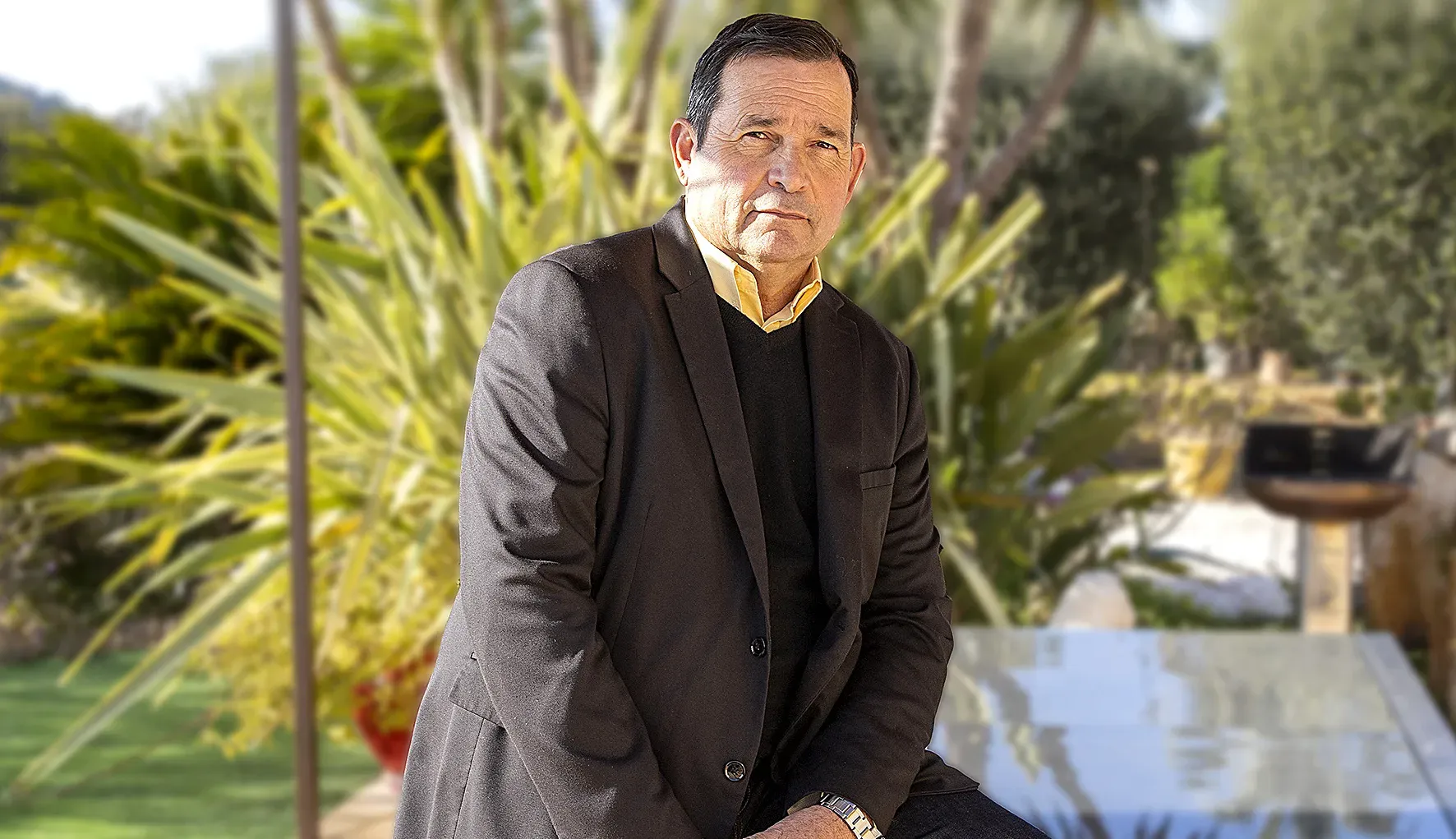
Beyond the lively exchanges of the opposition elected officials who abstained during the vote, some point, among other things, to the electoral posture of Mayor Jean-Pierre Giran, who supported the interest of preserving part of the agricultural land. For Max Bauer, the mayor's position can be understood and defended, but it also faces some pitfalls... As a reminder, in 2022, the municipality of Hyèresles-Palmiers requested the Chambre d’Agriculture du Var to study the opportunity of setting up a ZAP, motivating this prescription by a desire to preserve agricultural land. The ZAP is a public utility easement that makes it possible to preserve the agricultural purpose of areas of general interest due to the quality of their production, their geographical location, or their agronomic quality.
REDUCTION OF AGRICULTURAL AREAS

Max Bauer points out: 'A public utility easement (SUP) relates to sectors of the municipality where constructibility is limited or prohibited. These are administrative limitations on property rights established in the general interest, which impose a certain number of constraints. The SUPs prevail over local urban plans (PLU). However, in Hyères, over the last fifty years, there has been a significant reduction in agricultural areas. Some sectors have been reclaimed by forest; these are largely fallow lands that have become denser and wooded due to a lack of maintenance. Agricultural land has also disappeared due to economic difficulties faced by the horticultural sector in the municipality and more broadly in the agricultural basin, as well as difficulties in generational renewal. In some cases, farmers without buyers have resolved to sell their plots or urbanize them to secure a more comfortable retirement.' Thus, dismantling a fallow greenhouse and the associated costs will represent between €60,000 and €80,000 per hectare, which can reach up to €200,000 per hectare depending on the type of structure. Renovation costs will also be very high, ranging from €100,000 to €300,000 for one hectare of fallow greenhouses. In Hyères, the approved PLU agricultural zone covers 3,250 ha, representing nearly 24% of the municipal area. The total perimeter of the ZAP is 2,542 ha. The agricultural diagnosis identified 206 ha currently fallow or under-exploited. To carry out municipal agriculture, in 2023, a socio-economic analysis survey work was conducted among 301 farms. Only 76 questionnaires were returned by the farmers!
WATCHING OVER AGRICULTURAL LAND
Max Bauer points out: 'Tools already exist, such as the Commission Départementale d'Aménagement Foncier (CDAF) whose role is, precisely, to watch over agricultural land. Furthermore, the development of uncultivated or under-exploited land can also fall within the framework of the procedure provided for in articles L125-1 and following of the Code Rural et de la Pêche Maritime. This procedure has the objective of forcing a landowner to bring their uncultivated land back into cultivation. This approach is part of a virtuous logic of finding an amicable solution to the redevelopment of the land and, in the event that no agreement is reached, the préfet retains the possibility of intervening to decide on the matter. The Municipality could therefore very well initiate this procedure collectively after identifying the plots concerned and act in a way that is both targeted and broader than individual actions. We are talking about financial aid that would be unlocked under certain conditions'! According to Max Bauer: 'The right to property in France, as governed by the provisions of Article 544 of the Code civil, is struggling. The ZAP tool makes it possible to protect the agricultural purpose, but not at any cost! Because this tool exempts the administration from real consultations with the main parties concerned through a form of arbitrary confiscation without real funding or compensation leverage. We must also initiate legislative steps to work on modifying the legal regime of rural leases. Current law offers no solution; worse, existing solutions essentially offering very long-term leases encourage owners to keep properties without renting them.' In his capacity as an agricultural trade unionist and president of Uniphor (Union Nationale des Intérêts des Professionnels Horticoles), Max Bauer has been acting for many years to submit alternative solutions to Parliament. This includes, for example, the AUPA (Aire Urbaine de Productions Agricoles) contract, which is outside the framework of the rural lease. It concerns agricultural plots with an area less than or equal to two hectares. It is part of a fourfold desire: to halt the disappearance of agricultural land in the face of urban development, to promote the development of local agriculture and therefore limit transport, to promote a mix of landscapes, and to help farmers set up.
THREE BILLS
Thanks to the action of Max Bauer, this contract has been presented three times through bills. First, in November 2016 by Christophe Castaner (proposition de loi n°4200 relative aux aires urbaines de production agricole), then, in March 2018, by Jean-Louis Masson (proposition de loi n°786 visant à revitaliser les terres agricoles en zone périurbaine). And finally, in February 2025, by Stéphane Rambaud, Member of Parliament for the third constituency of the Var. This bill has not yet been adopted, but the CR elected official has not said his last word. Max Bauer concludes: 'Twenty years of trade unionism have deeply rooted me in this territory that I defend with pride and passion. It is time to defend the ideas of farmers on the political field by getting involved in the next municipal elections. I have many things to say and propose. Those who know me know that I never break off dialogue to serve the general intentions of to serve the general interest.'
Photo PRESSE AGENCE.