A particularly successful large-scale construction project
Since June 6, a new era has begun for mobility in the Métropole.
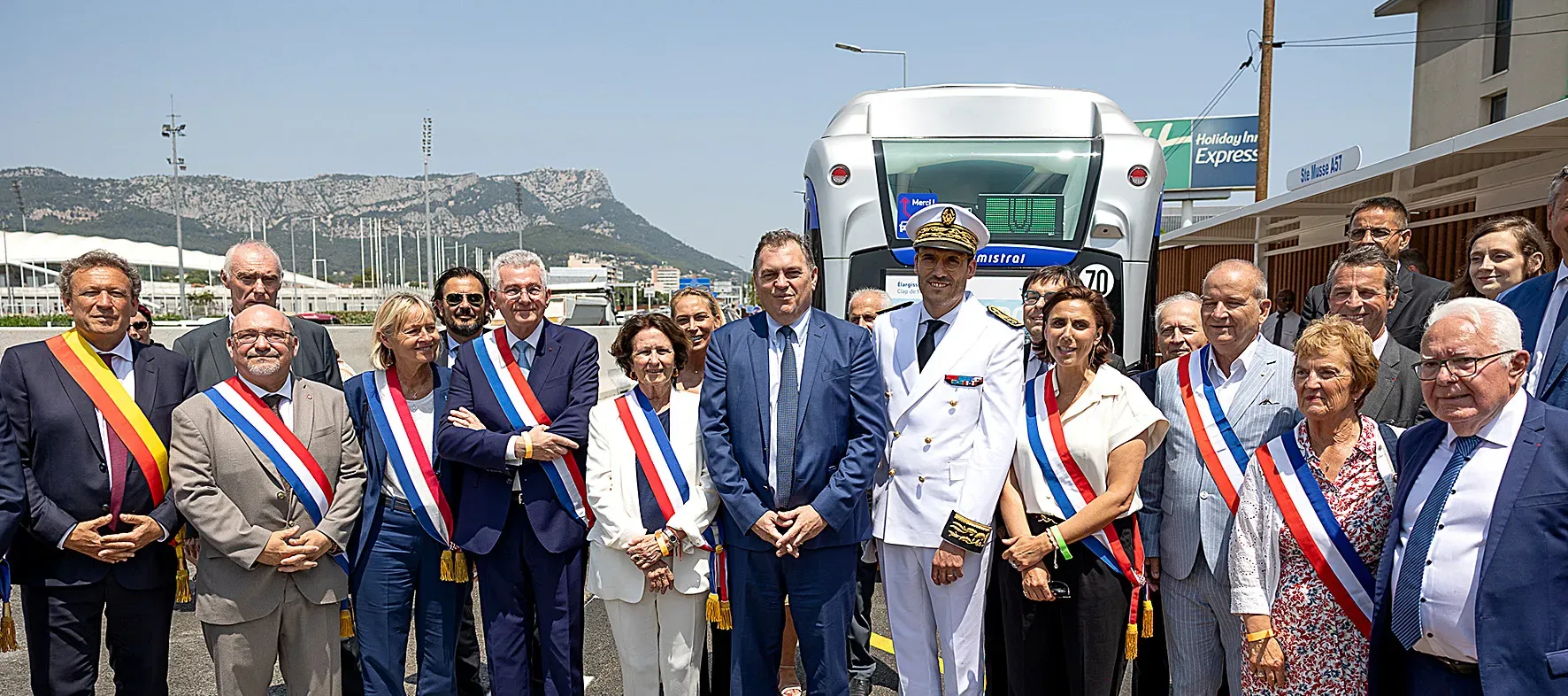
Indeed, this motorway axis essential to the local economy has been transformed to improve traffic flow and travel safety in the Métropole Toulon Provence Méditerranée. This project, costing €300 million and fully funded by VINCI Autoroutes under the Escota concession contract, deeply transforms a motorway axis essential for the travel of the Varois, used daily by an average of 110,000 vehicles. A major project to ease traffic flow and secure travel The widening of the A57 to 2 x 3 lanes is part of a global approach aimed at improving traffic flow and travel safety in the Métropole Toulon Provence Méditerranée.

This project, awaited by an entire region, offers numerous benefits: improved traffic conditions, contribution to the development and attractiveness of the area, and enhanced safety for users and VINCI Autoroutes staff working daily on this highly traveled section. For VINCI Autoroutes, widening the A57 over 7 km represents a major construction project. It involves not only creating an additional lane in each direction of travel but also entirely rethinking the configuration of the interchanges, while integrating the latest environmental standards and resource preservation, particularly regarding water.
Major challenges met The challenge was significant, as this urban corridor continuously hosts very heavy traffic. From the very first phases of study, beyond just a technical response, the operation was guided by major objectives: How to turn the widening of the A57 into an opportunity to accelerate the decarbonisation of the motorway? How to carry out this construction work while involving local residents and neighbors, for whom the A57 – and its iconic palm trees – is part of daily life?
Advertisement
How to carry out the works while minimising disruption for local residents and the 110,000 users who travel on this strategic axis every day?

Infrastructure designed for tomorrow's mobility The widening of the A57 was accompanied by concrete measures to promote sustainable mobility and meet the expectations expressed during the 2018 public inquiry. Lanes reserved for public transport (VRTC) have been created, and two bus stops have been built directly on the motorway, in fully secured areas, separated from traffic by 1.80 m concrete barriers.

A motorway redesigned within its landscape As early as 2018, VINCI Autoroutes initiated extensive consultation with local authorities on the landscaping aspects of the project. Several meetings made it possible to co-design the future face of the A57, with particular attention paid to interchanges, highly visible features at town entrances. In total, 30,000 trees and shrubs were planted or replanted along the motorway, selected from adapted Mediterranean species that are both resilient and water-efficient, in a sustainable approach to maintenance and landscape integration.
An absolute priority: safety on the construction site Throughout the project, Escota deployed the "Zero Accident Project Management" policy, applied for many years to all projects managed by VINCI Autoroutes. This commitment resulted in a proactive approach to prevention, reinforced inspections, and a rigorous organization, with a continuous human presence on site.
Promoting local employment and integration At the initiative of VINCI Autoroutes, all the companies in the consortium in charge of the works committed to promoting local employment and combating exclusion, through the inclusion of a social integration clause. This momentum took concrete form at the end of 2020 with the signing of a partnership agreement between the Préfecture du Var, the Métropole Toulon Provence Méditerranée and its Maison de l'Emploi, France Travail, and VINCI Autoroutes.
Constant local communication Located in the heart of the city, the A57 construction site required a robust, continuous, and transparent information system, set up right from the study phases. A multi-channel action plan was deployed, including a dedicated website, a newsletter for local residents, the weekly publication of press releases, and a network of liaison agents from the region, each assigned to a specific sector, available on-site, by email or telephone, to answer questions from local residents and users.
Photos: Philippe OLIVIER.