At Sainte-Musse, preventing gynecological cancers to fight them better
Each year, 'Septembre turquoise' recalls the importance of screening and preventing gynecological cancers.
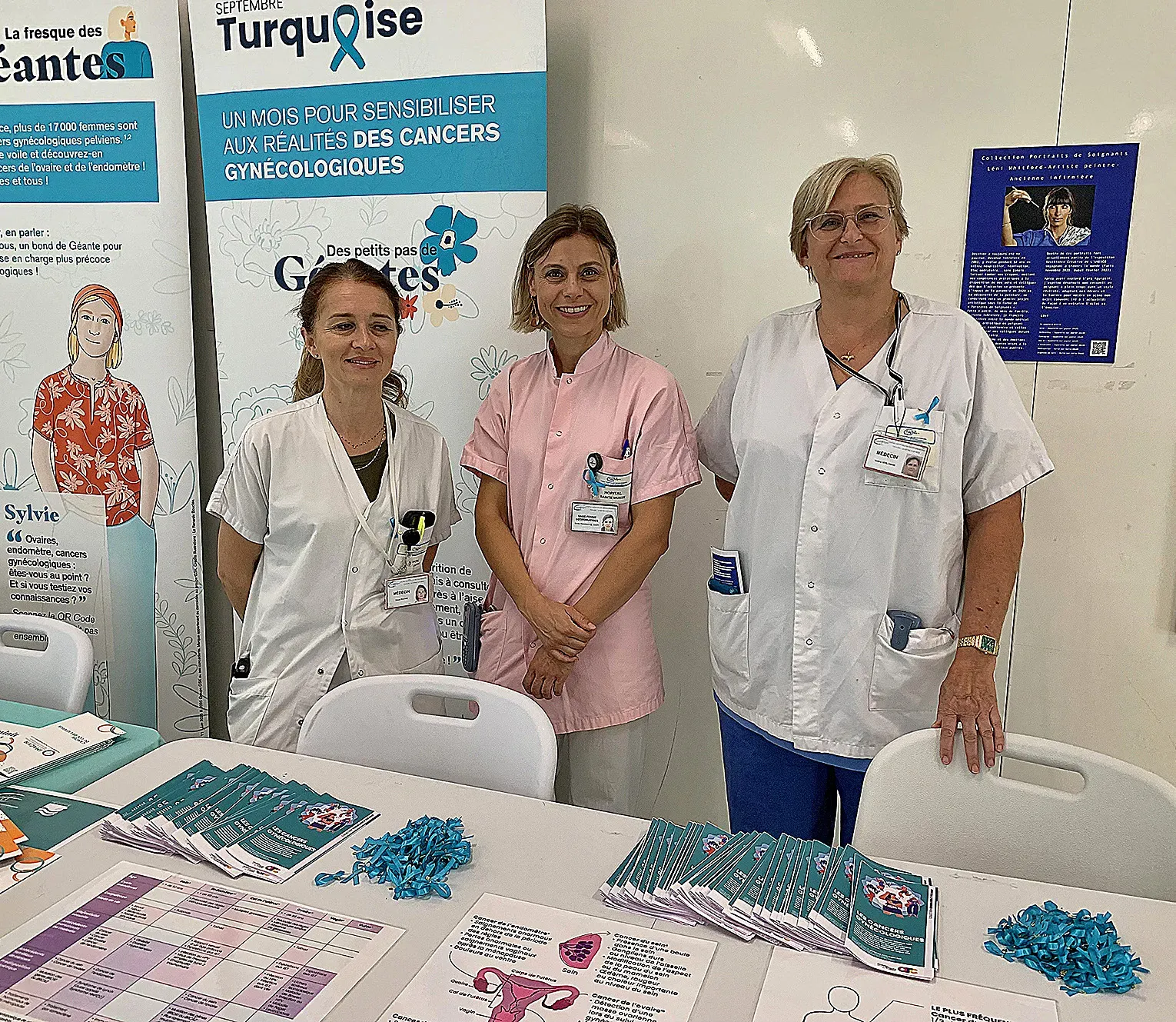
On September 11, Sainte-Musse hospital mobilized with an information stand run by its medical and paramedical teams. The objective was to raise awareness among the general public, but also healthcare professionals, about cancers that are often misunderstood and yet formidable.

LESSER-KNOWN CANCERS When speaking of female cancer, the first that comes to mind is breast cancer, highly publicized in October thanks to the national Octobre rose campaign. However, other cancers affect the female reproductive system: cervix, uterus, vagina, endometrium, ovaries, and vulva. 'They are less common than breast cancer, but they are no less serious.
Cervical cancer, for example, affects young women from the age of 25. As for ovarian cancer, it remains one of the most difficult to detect, often diagnosed late, in patients over 70 years old,' recalls a gynecologist from the hospital.
Advertisement
The message to the public is that prevention also involves vaccination. A major breakthrough in recent years is the vaccination against human papillomavirus (HPV), the main cause of cervical cancer. It is recommended for young girls and boys from adolescence.
SCREENING AND HEALTHCARE NETWORK 'Today, it is the only vaccine capable of preventing cancer. It is an opportunity that must be seized,' highlights a midwife from the hospital center.
Furthermore, a complete and coordinated healthcare network exists. Indeed, beyond providing information, Sainte-Musse hospital is a major player in patient care. 'As a screening center, it is part of a regional network, with Nice and Marseille, allowing for rapid and multidisciplinary care, regardless of the cancer involved.
Today, we have the technical and human resources to support our patients from diagnosis to treatment,' adds an oncologist.
The idea is to break taboos and talk about the disease, insist the caregivers: 'The importance of talking about these illnesses that are still surrounded by silence. Some women hesitate to consult out of modesty or fear. Yet, the earlier a cancer is detected, the greater the chances of recovery.'
Vigilance and regular check-ups are essential: • Cervix: Screening is recommended starting at age 25, then at regular intervals. A simple consultation every two years with a gynecologist or a midwife allows for early detection of abnormalities. • Vulva and vagina: These rarer cancers can be screened during the same gynecological follow-up.
• Ovary: In the absence of a systematic screening test, clinical examination, supplemented by an ultrasound if necessary, remains indispensable. • Endometrium: It often presents quickly identifiable symptoms. 'Any bleeding after menopause should be a warning sign and lead to a consultation,' insist the doctors.
Photo PRESSE AGENCE.