In 2026, the bill will be steep for mutual insurance members
Healthcare spending, covered by the Sécurité sociale as well as by mutuals, has been rising continuously for 15 years.
The causes are well known (aging population, chronic illnesses, technological innovations, etc.) After an average increase of 1.8% per year between 2013 and 2020, the rise has intensified since 2020: +4.4% per year, or +22% in 5 years.

EUROPEAN ANOMALY "In addition to this structural increase, this year, mutuals will have to bear a transfer of €400 million in the hospital sector, €600 million in daily allowances, and a new tax, a real 'VAT on health', of one billion euros which will be borne by the insured at the end of the chain," laments Dominique Viot, president of the Var delegation of the Mutualité Française. Furthermore, with a tax on contracts rising to 16%, France is a European anomaly. The mutual insurance representative explains: "The Government and parliamentarians are going to make the insured pay, but without taking responsibility for it and by trying to shift the blame onto complementary health insurers."
In concrete terms, the Sécurité sociale is disengaging, public authorities are taxing, and mutuals are compensating. "However, mutuals are managed in accordance with their prudential obligations, which require them to conduct their business in a 'sound and prudent' manner; they cannot run up debt, unlike the Sécurité sociale. They adjust their contributions as closely as possible to the forecasts of the risk to be covered," adds Dominique Viot.
Advertisement
Thus, the average gap between contribution growth and benefit growth for mutuals was only 0.3% per year between 2011 and 2024.
And, because spending will remain dynamic in 2026, contributions will increase in 2026 by an average of 4.3% for individual contracts and 4.7% for group contracts.
But the most serious issue lies elsewhere according to the head of the Mutualité Française: "I accuse the PLFSS for 2026 of being irresponsible because the ONDAM (forecast of healthcare spending) is insincere, the deficit is considerable, and the healthcare system is weakened year after year. If we do not act, we will be saying the same thing next year and the inflationary curve will continue to climb, driven by the aging of the population and the cost of medical innovations."
CALL TO CITIZENS Yet this is not inevitable. Acting for efficiency, reducing redundant procedures, fighting fraud, and investing heavily in prevention are an absolute urgency. According to the Cour des comptes, €50 billion in spending could be avoided, including €20 billion immediately.
According to the Haut Conseil au Financement de la Protection Sociale, social fraud amounts to €14 billion.
"We are at a crossroads. Let's build the system of the next 10, 20, 30 years. This will not happen without the citizens.
That is why, as members of civil society, we are launching a strong appeal to professionals and citizens, as part of the États généraux, to choose tomorrow's healthcare model. Let's act now before it is too late," warns the president of the Mutualité Française du Var.
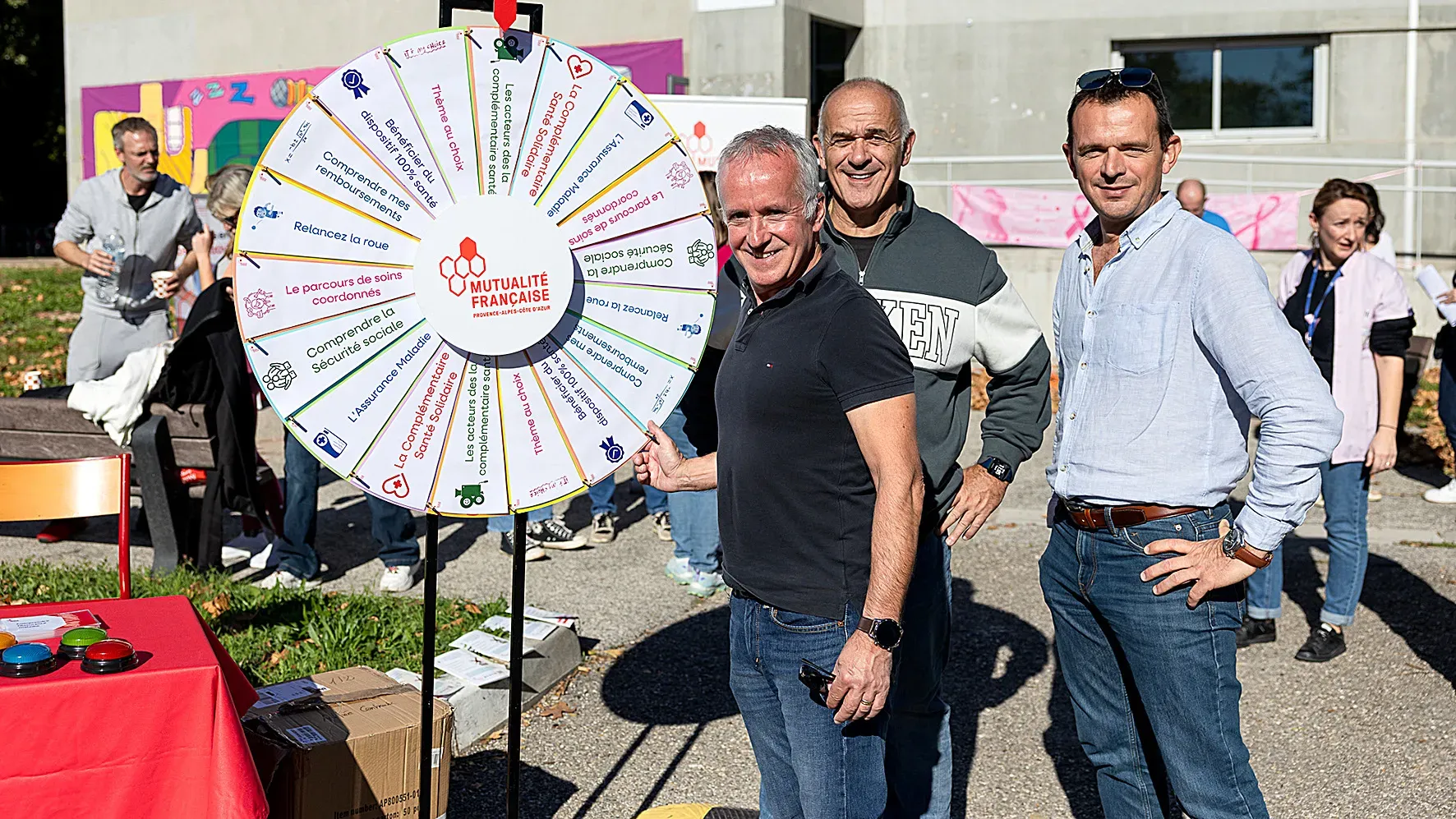
Photo Philippe OLIVIER.