A treasure of underwater exploration about to be restored
The FNRS III is one of the very first submersibles designed to explore the deep ocean.
Designed in the early 1950s by the Marine nationale in Toulon, based on an idea by Professor Piccard – the scientist who inspired the Tintin character, Professor Tournesol – this craft marked the history of ocean exploration. Thus, in 1954, the FNRS III set a depth record by reaching 4,050 meters off Dakar, becoming the first submersible to take humans so deep into the abyss. This record was held by France for seven years, until it was beaten by the Trieste, which dived into the Mariannes Trench to a depth of over 10,000 meters.
SCIENTIFIC ADVANCEMENTS

The FNRS III, which could accommodate two people, was the smallest vessel in the Marine. Although it resembles a small submarine, only its steel sphere can accommodate humans, while its upper part is a large float. The discoveries it made allowed for great scientific advancements, revealing the presence of life at great depths. The machine had an impressive career, traveling as far as Japon, into the waters of Portugal to study various marine phenomena. Faced with changing needs in underwater exploration, France has since designed modern small submersibles capable of diving up to 6,000 meters. Today, the bathyscaphe is on display in Toulon, in the gardens of the Tour Royale. Unfortunately, its location on the edge of the bay has exposed it to sea spray, salt, and wind, leading to significant degradation of the craft. Those in charge at the musée national de la Marine are therefore considering its restoration. A complex dossier is being prepared, as the FNRS III is a full-scale industrial and scientific object, requiring specific skills in naval restoration. This ambitious project requires additional funding, exceeding usual restoration budgets.
FUNDING

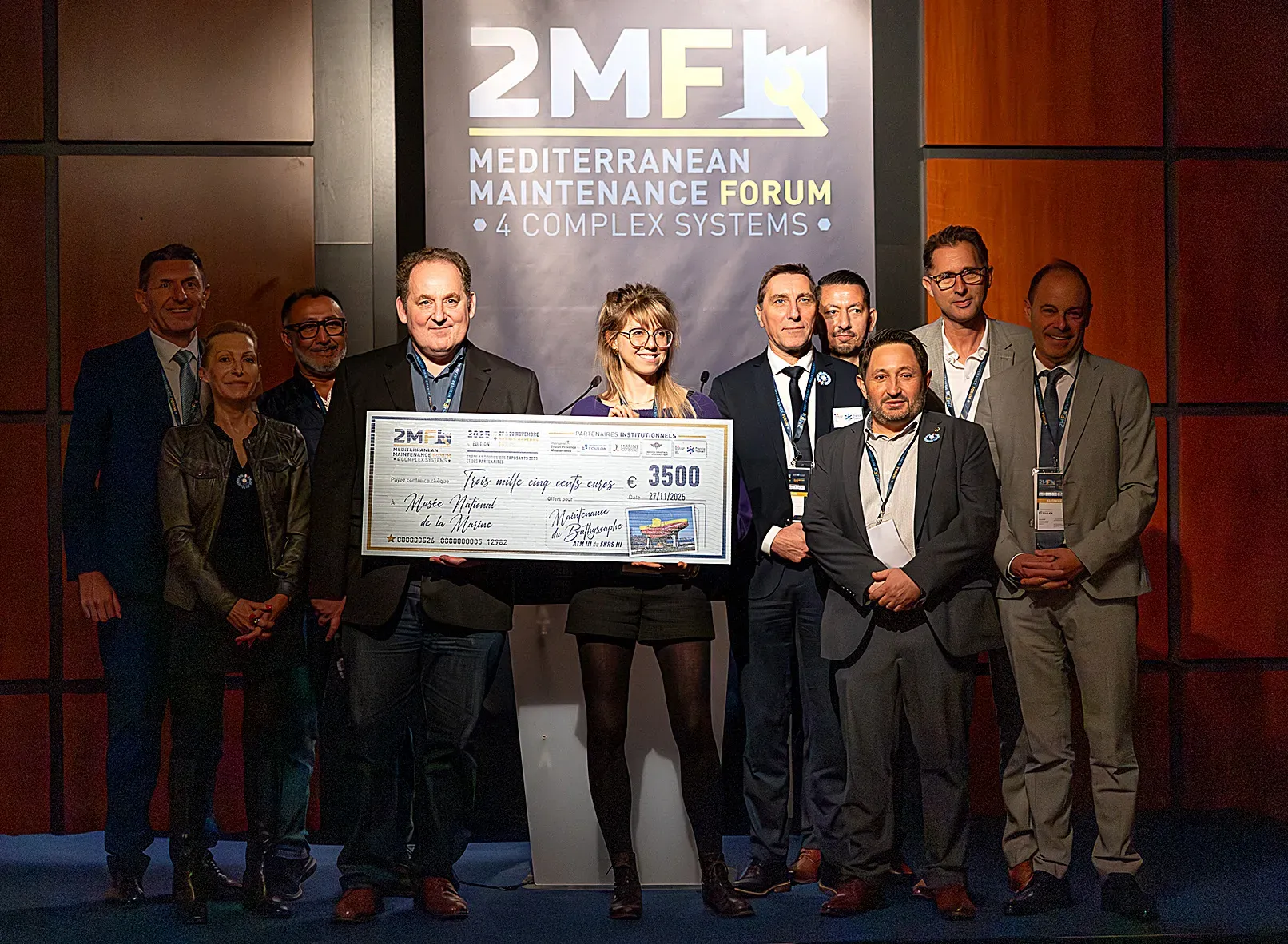
Therefore, the museum will soon announce the details of this project as well as the different ways to participate in its funding. The goal is not to return the bathyscaphe to the same location, in order to avoid similar degradation. It will be transferred to a public place, ideally near the museum, to allow a better connection with the collections and tell its fascinating story. Finally, it will hold a prominent place in an upcoming exhibition on the history of deep-sea exploration in the Méditerranée, highlighting a little-known part of Toulon's history. This pioneering craft, which contributed significantly to scientific research, was designed with the help of iconic figures (Jacques- Yves Cousteau, Frédéric Dumas, Philippe Tailliez) who worked on its design with the Marine. The FNRS III was retired from service upon the arrival of its successor, the Archimède, which takes its name from Archimède's principle of buoyancy. The latter is on display at the Cité de la Mer in Cherbourg.
Laurette PARAY – Photos by Philippe OLIVIER.