François de Canson defends the "peasants" of the sea
At the Salon International de l’Agriculture 2026, Région Sud recalled that its terroir is also maritime, highlighting a supported sector of excellence.
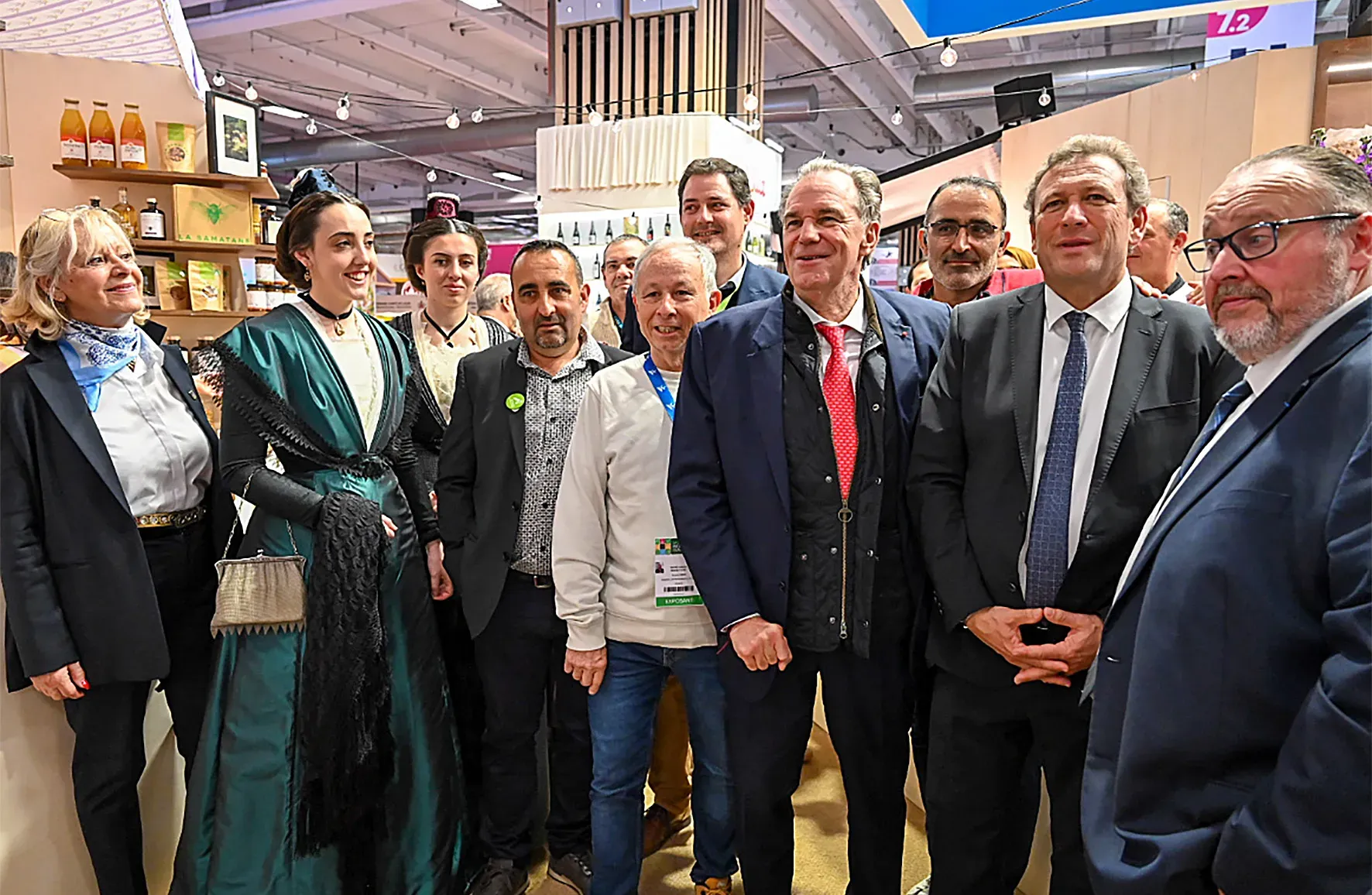
In the crowded aisles of the Porte de Versailles, the scent of lavender and hay sometimes gives way to the sea spray. On Tuesday, February 24, during the inauguration of the regional stand, François de Canson, Vice-President of the Région in charge of economic development, and Bénédicte Martin, Vice-President delegate for Agriculture, recalled a geographical truth often forgotten in Paris: the Sud is a land turned towards the sea. For this inaugural visit, they were accompanied by Jean-Louis Masson, President of the Département du Var.
A strong symbolic presence for the department which hosts an essential part of this blue economy.

Because behind the picture-postcard image, a true saltwater agriculture is playing out on our coastline. "Far from industrial trawlers, fishing in Provence-Alpes-Côte d'Azur retains a fiercely artisanal soul. It is this model, known as "petits métiers", that we defend because the regional fleet consists of 497 vessels for 643 fishermen.
Advertisement
This local network, practiced close to the coast, allows for a balanced distribution of fishing pressure and guarantees unequaled freshness. For the Région, supporting this sector through European funds for maritime affairs means preserving a vital territorial anchoring and modernizing equipment without losing the soul of the trade," assured François de Canson.

The Vice-President of the Région added: "If fishing is hunting, aquaculture and shellfish farming are true farming activities, demanding patience and technical skill. The Var particularly stands out in this field. Moreover, visitors discovered the excellence of production from the baie du Lazaret, in Toulon.
And, it is in the Camargue that oysters regularly awarded medals at the Concours général agricole are raised." But the "peasants of the sea" do not stop at shellfish. Regional marine fish farming has become a reference for sea bass and gilthead seabream.
To the west of the territory, in Port-Saint-Louis-du-Rhône, mussel production reaches heights of 2,500 to 3,000 tonnes produced each year by 34 professionals grouped in a cooperative. These figures testify to a structured sector, capable of economic weight while remaining faithful to its roots.
VALUING AND PROTECTING François de Canson continues: "Defending those who feed us and preparing for the future. This maxim applies just as much to breeders in the Alpes as to shellfish farmers on the coast. The challenge now is to make the general public recognize this quality.
This is the entire meaning of integrating these maritime sectors into the "100 % Valeurs du Sud" initiative. This regional label guarantees quality, origin, and respect for the environment. By encouraging short supply chains and integrating these seafood products – such as the fish soup or the rillettes from Le Bec Fin present on the stand – the Région ensures the sustainability of a know-how threatened by climate change and international competition.
Cultivating the sea is a challenge. The Var and the Région Sud seem determined to take it up."
LIVING HERITAGE This year 2026 was not chosen by chance since it is the international year of rangelands and pastoralism. For the Sud, the stakes are colossal. Pastoralism is not just a folkloric postcard because it is the backbone of our rural areas.
Advertisement
It covers 29% of the regional territory, meaning more than 870,000 hectares of alpine pastures and rangelands maintained by herds. Every year, 605,000 sheep and 22,500 cattle transhume, shaping our landscapes and preventing natural risks where no other agriculture is possible. The recognition is also global, since transhumance is registered as UNESCO intangible cultural heritage.
To mark the occasion, Renaud Muselier announced a series of emblematic events, including an international colloquium at the MUCEM from April 22 to 24, as well as the festival "Pastoralisme d'aujourd'hui et de demain" in Digne. However, François de Canson does not forget the sometimes harsh realities of the shepherd's trade: "The collectivity is leading a proactive policy to improve living conditions in the mountains. In 2025, 40 projects to build or renovate pastoral huts were supported.
To continue this momentum, a call for projects, opened on February 5, runs until March 31, 2026."
Finally, the regional institution is tackling the economic structuring of the sector. Long considered a waste product, regional wool is experiencing a revival. A collective dynamic launched since 2025 has made it possible to identify 42 business projects to recreate a local textile sector, from sorting to washing, thus generating added value and artisanal employment.
Photos Région Sud.